

My history teacher in ninth grade had a habit of rushing through entire centuries in forty minutes.
One afternoon he spent twenty minutes on the causes of World War One, wrapped it up, then spent the remaining time having us copy notes about treaty dates. Nobody asked questions. Nobody really could. The pace made curiosity feel like an inconvenience.
Years later I picked up a book called “A People’s History of the United States” by Howard Zinn almost by accident. A friend had left it at my place. Three chapters in, I realised I had been taught a very specific version of history, one that had certain people at the centre and quietly pushed everyone else to the margins.
That realisation was uncomfortable. It was also one of the most interesting things that had ever happened to me intellectually.
The stories that got left out of my textbooks were not minor footnotes. Some of them were enormous. Some explained things about the present that had never made sense to me before. And almost all of them were more interesting than what I had actually been taught.
Why Textbooks Leave Things Out
Before getting into the specific stories, it helps to understand why the gaps exist in the first place.
Textbooks are not written by historians sitting alone with primary sources. They are produced by committees, approved by state boards, and shaped by what various groups find acceptable or politically comfortable. The process is slow, conservative, and full of compromise.
A history that challenges national myths, names the wrong people as heroes, or complicates the narrative of progress is harder to sell to school boards. So uncomfortable truths get softened, complex figures get simplified, and entire communities get written out.
This is not always deliberate malice. Sometimes it is just the logic of institutions. Space is limited, some topics feel too contested for a classroom, and whoever is making decisions about what counts as important history tends to reflect the values of whoever already holds power.
The result is a version of the past that feels cleaner and more linear than it actually was.
The Myth of Smooth Progress
One of the biggest distortions in standard history teaching is the idea that things generally get better over time in a steady forward march. Slavery ended, rights were extended, science advanced, and here we are. Progress.
Actual history is much messier. Rights that were won got taken away. Communities that flourished were destroyed. Advances in one area often came at enormous cost in another. Understanding that messiness is not pessimistic. It is accurate, and it makes the present make a great deal more sense.
The Tulsa Race Massacre of 1921
Here is a story that was actively suppressed for decades, not just neglected.
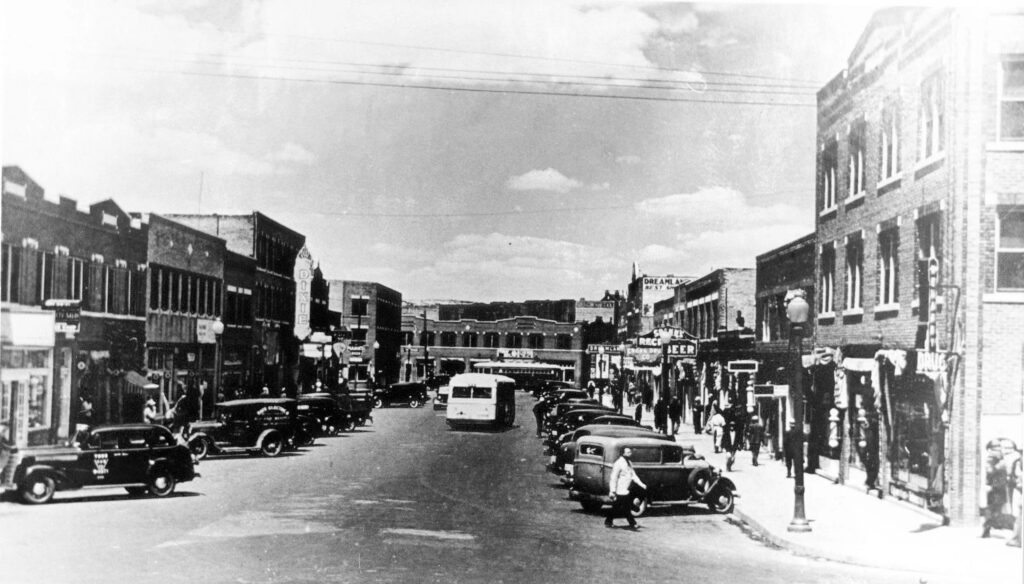
In May and June of 1921, a white mob attacked the Greenwood District of Tulsa, Oklahoma. Greenwood was known as Black Wall Street. It was one of the most prosperous Black communities in the United States at the time, with its own hospitals, law offices, hotels, and schools.
Over the course of about eighteen hours, the neighbourhood was destroyed. Homes and businesses were burned. Some accounts describe planes being used to drop incendiary materials on the district. Hundreds of people were killed, though the exact number has never been officially established. Thousands were left homeless.
What Happened Afterwards
The massacre was largely scrubbed from official records. Local newspapers that had initially reported on it went quiet. Oklahoma did not include it in school curricula for most of the twentieth century. Many survivors never spoke about it publicly because speaking about it felt unsafe.
It took until 2001 for an official state commission to publish a full report on what happened. HBO’s drama series Watchmen, which aired in 2019, brought the massacre to wide public attention for the first time for many younger viewers. That a television show did what school systems had not managed for a century is worth sitting with.
Why This Matters Now
Greenwood’s destruction removed generational wealth from an entire community in a single night. Understanding that history helps explain patterns of economic inequality that persist today. Without it, those patterns look like personal failures rather than the result of specific historical violence.
The Women Who Ran the Underground Railroad
Harriet Tubman appears in most textbooks, which is good. What gets left out is the broader network of women who made the Underground Railroad function.
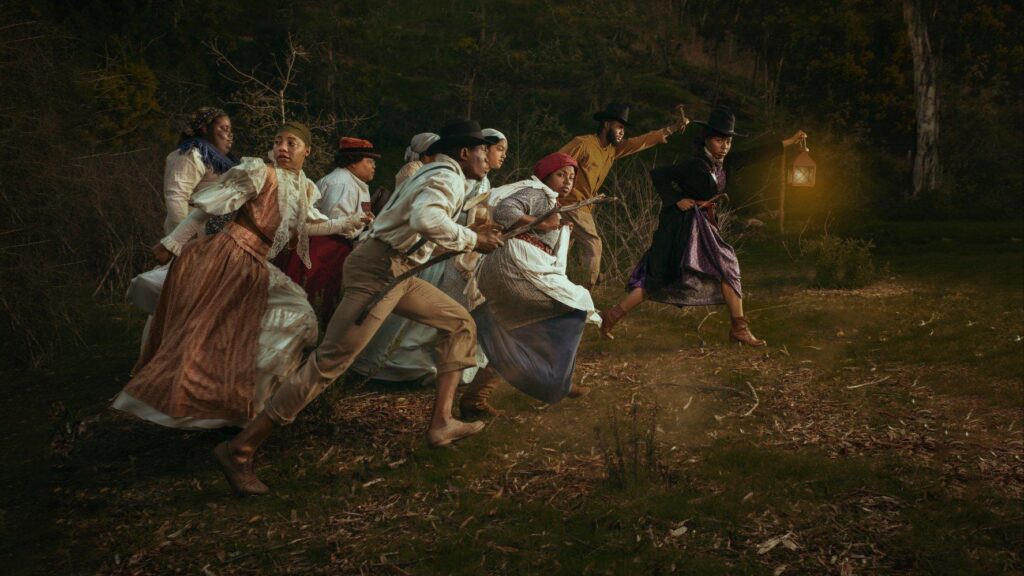
Tubman was extraordinary. She was also part of a larger system. Women like Jermain Loguen, who was herself enslaved and later became a central organiser, and the Philadelphia-based network led by figures including William Still, whose meticulous records are some of the most valuable primary sources we have, were part of something far more collective than the lone-hero narrative suggests.
The Records That Survived
Still, who was the son of formerly enslaved parents and a free Black man himself, kept detailed accounts of every person who passed through his station. He interviewed people, recorded their stories, and eventually published them in a book called “The Underground Railroad” in 1872. That book is a remarkable piece of historical documentation that rarely appears in school curricula.
Reading it is a completely different experience from reading about the Underground Railroad secondhand. The people in it are specific and fully realised, not symbols. Their decisions, fears, and strategies are described in their own words or close to it.
The Partition of 1947 and What Textbooks in Both Countries Miss
For anyone from South Asia, or anyone with family roots there, 1947 is not ancient history. It is something grandparents survived.
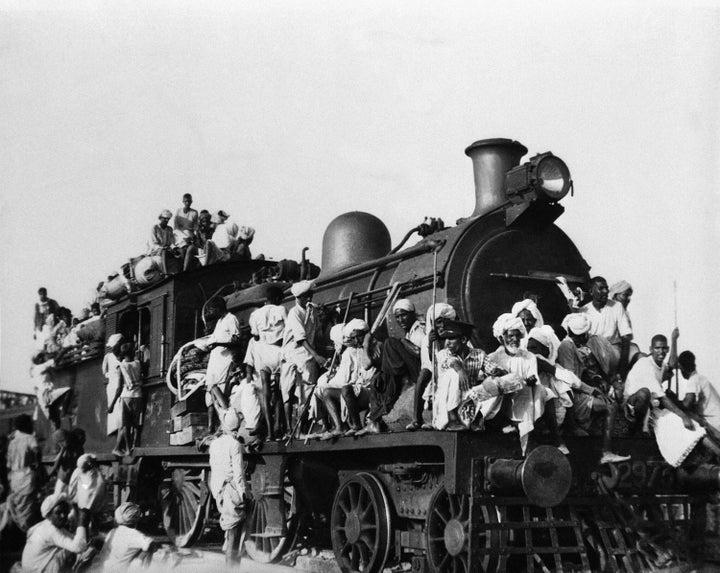
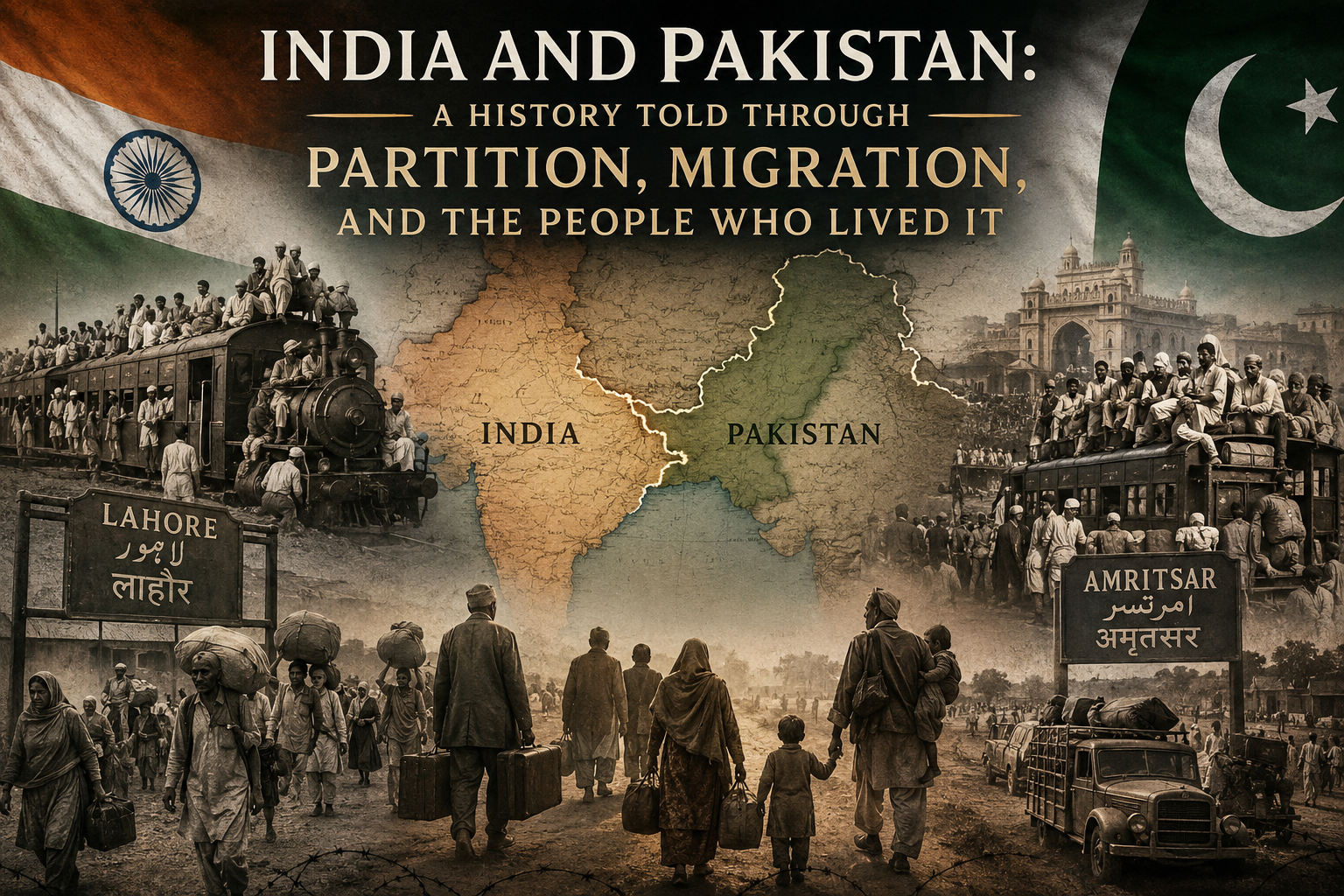
The partition of British India into India and Pakistan in August 1947 triggered one of the largest and most violent mass migrations in human history. Somewhere between ten and twenty million people moved across newly drawn borders. Estimates of those killed range from two hundred thousand to over a million. The violence included massacres, abductions, and atrocities carried out by communities against each other that were, in many cases, neighbours.
What Gets Left Out in Indian Textbooks
Indian school curricula tend to emphasise the achievement of independence and minimise the violence and the human cost of partition. Nehru’s famous “Tryst with Destiny” speech features prominently. The suffering of refugees and the scale of communal violence is treated briefly if at all.
What Gets Left Out in Pakistani Textbooks
Pakistani curricula have their own distortions, often framing partition as an unambiguous victory and independence narrative while also minimising the violence and erasing the role of Hindu and Sikh communities who had lived in what became Pakistan for centuries.
What Oral History Fills In
The 1947 Partition Archive, a nonprofit based in Berkeley, California, has collected over ten thousand survivor testimonies from people who lived through partition. These recordings are available online and represent one of the most significant oral history projects of the modern era.
Listening to even a few of them is a completely different experience from reading a textbook summary. The specificity of what people remember, the sensory details, the way individual stories complicate any clean national narrative, is striking and important.
The Eugenics Movement in the United States and Britain
Most people associate eugenics with Nazi Germany. That association is correct, but it is incomplete in a way that lets too many institutions off the hook.
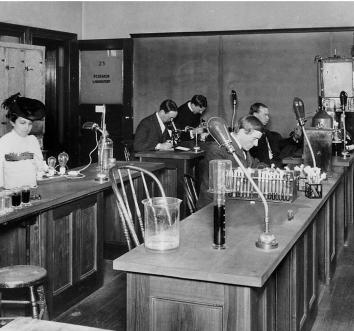
Eugenics was mainstream science and mainstream policy in the United States and Britain decades before the Nazis adopted it. The movement had support from universities, philanthropists, government officials, and respected scientists. Forced sterilisation programmes operated in multiple American states. The Supreme Court upheld forced sterilisation in 1927 in Buck v. Bell, a decision that has never been formally overturned.
The Names Attached to This
The Rockefeller Foundation funded eugenics research. The Carnegie Institution supported it. Figures celebrated in other contexts were enthusiastic eugenicists. This is not fringe history. It is the history of mainstream American institutions doing something that was later condemned as one of the defining horrors of the twentieth century after Germany made the logic undeniable.
Textbooks tend to present eugenics as a foreign aberration rather than something that was domestically popular, well-funded, and legally embedded in American life for decades. Understanding that changes how you think about scientific consensus, institutional power, and the conditions under which harmful ideas gain legitimacy.
Forgotten Women of Science
Marie Curie makes it into most textbooks. She should. What gets left out is the extensive pattern of women doing scientific work that was then credited to men, or simply not credited at all.
Rosalind Franklin’s X-ray crystallography work was essential to Watson and Crick’s discovery of the structure of DNA. Franklin did not share the Nobel Prize. She had died by the time it was awarded, and the prize is not given posthumously. Whether she would have been included otherwise is a question historians still debate, but the way her contribution was minimised in the original publication and in how the discovery was publicly celebrated for years is well documented.
Lise Meitner and Nuclear Fission
Lise Meitner co-discovered nuclear fission with Otto Hahn. Hahn received the Nobel Prize in Chemistry in 1944. Meitner did not, despite being the one who had theoretically explained what was happening in the experiments. She was nominated for the Nobel multiple times and never received it.
Meitner was Jewish and had fled Nazi Germany in 1938, which affected the circumstances of her work. She refused to participate in the Manhattan Project on ethical grounds. She was later called the “mother of the atomic bomb” in press coverage she found deeply objectionable because the bomb was something she had actively opposed.
Her story is not a footnote. It is central to understanding how nuclear physics developed and who actually did the foundational work.
How to Dig into the History You Were Not Taught
The good news is that access to alternative historical sources has never been better. The bad news is that the internet also makes it easy to encounter bad history, conspiracy theories dressed up as hidden truths, and politically motivated revisionism.
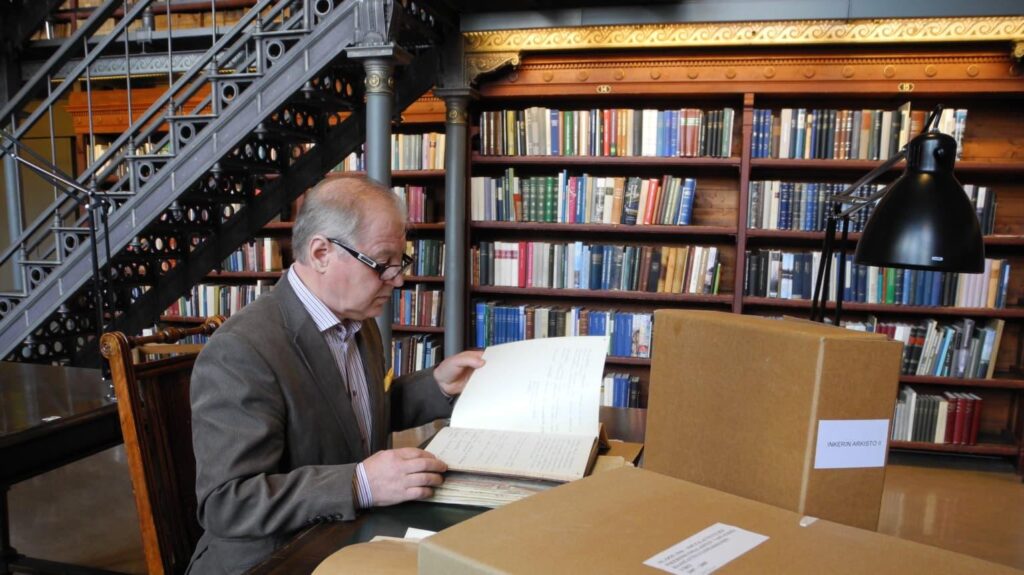
Here is a practical approach to going deeper without getting lost.
Start With Reputable Historians
Howard Zinn is a useful starting point but not the only one and not uncriticised. For different perspectives on American history, historians like Ibram X. Kendi, Eric Foner, Taylor Branch, and Annette Gordon-Reed write accessibly and rigorously. For global history, James Loewen’s “Lies My Teacher Told Me” is specifically about textbook distortions and is well documented.
For British history, David Olusoga’s “Black and British” covers an entire strand of history almost entirely absent from standard British school teaching. Caroline Elkins’ “Legacy of Violence” on the British Empire won the Pulitzer Prize in 2022 and is thorough and important.
Use Digital Archives
The Internet Archive at archive.org holds digitised versions of historical documents, newspapers, and books that are out of copyright. Primary sources are available there that would previously have required a university library to access.
The Chronicling America project, run by the Library of Congress, digitises historical American newspapers and allows you to search them. Reading how a specific event was covered in its own time by different newspapers is a completely different experience from reading a later summary.
Europeana aggregates digitised material from European cultural institutions. The South Asian Digital Library has historical material relevant to the subcontinent.
Be Careful About What Counts as Hidden History
Here is the mistake a lot of people make once they start realising textbooks have gaps. They assume that anything described as hidden or suppressed must therefore be true. That reasoning is backwards and dangerous.
Flat earth theories, Holocaust denial, and various other harmful claims all dress themselves up as the hidden history they don’t want you to know. The test is not whether something was suppressed. The test is whether it has verifiable evidence, credible sources, and has been examined by people with relevant expertise.
Hidden history that is genuinely worth knowing is documented. Oral testimonies, physical evidence, contemporaneous records, and peer-reviewed scholarship back it up. It was not taught because it was inconvenient, not because there was no evidence for it.
Talk to Older People While You Still Can
Oral history is not a lesser form of history. It is sometimes the only form that survived.
If you have grandparents or elderly relatives or community members who lived through significant historical events, talking to them in depth and recording those conversations is genuinely valuable. The 1947 Partition Archive mentioned earlier was built entirely on this principle. StoryCorps in the United States has been doing something similar for years.
These conversations produce primary sources. They are irreplaceable once the people who hold the memories are gone.
Common Mistakes When Learning Alternative History
Getting into untaught history is rewarding and can also go sideways. Here are the patterns worth watching out for.

Treating all mainstream history as lies and all alternative history as truth is a trap. Official narratives can be distorted and alternative narratives can also be distorted. The goal is not to swap one uncritical acceptance for another.
Romanticising resistance movements without looking at their complexity leads to a different kind of simplification. Historical figures who fought for important things were also full human beings with contradictions, strategic errors, and sometimes troubling aspects of their own behaviour. A richer understanding holds both.
Assuming that because something was not taught it was deliberately suppressed is not always accurate. Sometimes things were not taught because of genuine ignorance on the part of curriculum writers, because the scholarship had not yet developed, or because space constraints led to certain priorities. Malice and neglect produce similar gaps for different reasons.
What Happens When You Start Filling the Gaps
Something shifts when you start learning the history that was left out of your formal education.
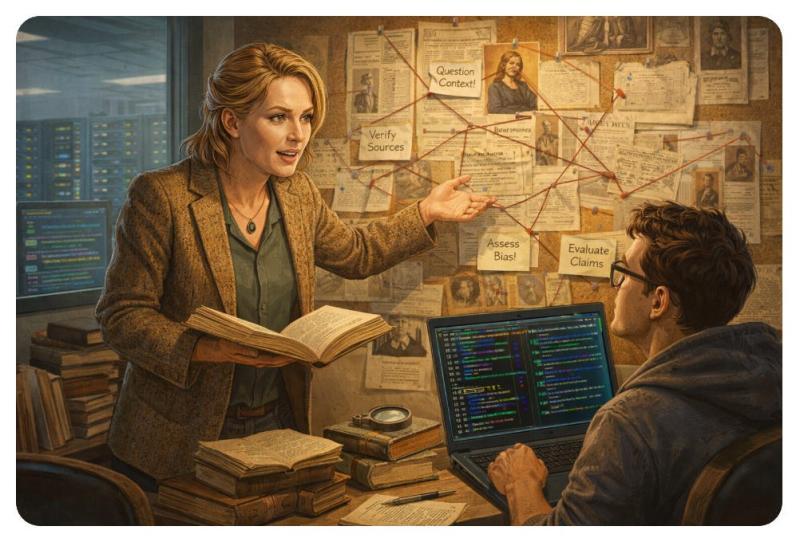
The present starts to make more sense. Patterns that seemed mysterious or random start to have origins. Groups that seem to come from nowhere have long histories. Conflicts that appear sudden have roots going back generations.
None of this makes the present deterministic or hopeless. Understanding how something came to be is not the same as accepting that it has to stay that way. Actually, understanding the origins of a problem is usually a prerequisite for doing anything useful about it.
The other thing that happens is that history gets more interesting. The cleaned-up, linear, hero-focused version taught in most schools is genuinely less compelling than the actual record of what humans have done to and for each other. The full picture has more texture, more tension, more unexpected characters, and more moments where things could have gone differently.
That is the history worth knowing. Not because it serves any particular agenda, but because it is truer. And because truth, even when it is uncomfortable, tends to be more useful than the version that was tidied up to make everyone feel better.
Start with one of the stories above. Follow it where it leads. Ask who else was in the room, whose name did not make it into the record, and what happened next to the people the textbooks moved on from.