
There is a specific kind of embarrassment you feel when you realize, at age nineteen, that you had no idea an entire civilization existed. Not a minor one either. One that was running universities, hospitals, and observatories while the city I grew up near had not yet been founded.
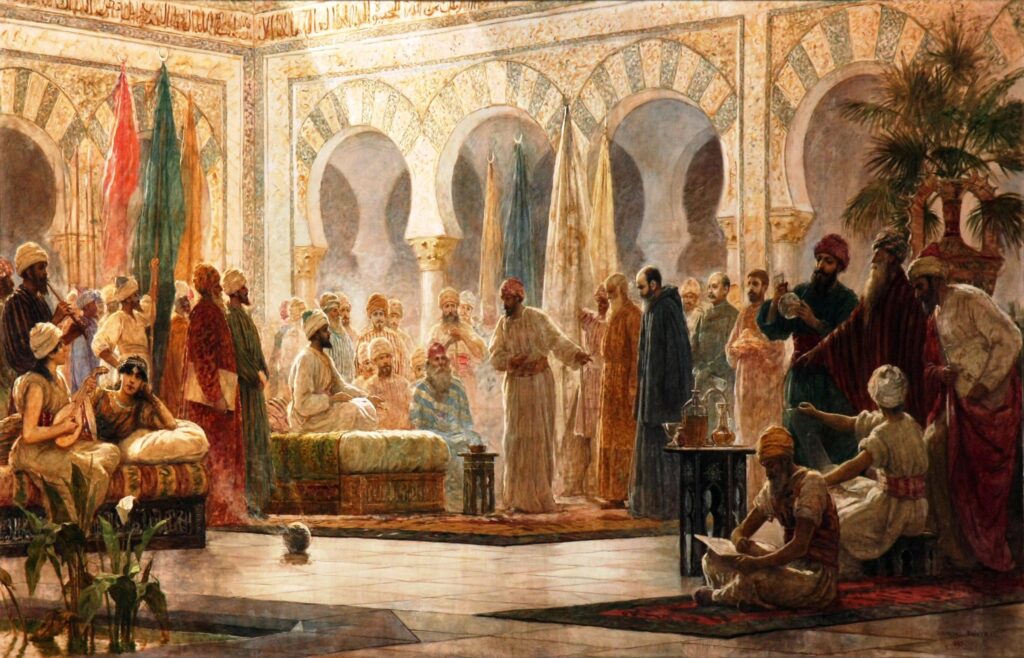
That was me in a freshman world history class when the professor spent three full weeks on the Abbasid Caliphate alone. I kept looking around the room wondering if everyone else already knew this stuff. Most of them did not. We had all come through school systems that skipped the same chapters.
The strange part is this is not obscure history. These are leaders who commanded armies of hundreds of thousands, built cities that dwarfed anything in medieval Europe, and made decisions that still echo in the geography and culture of half the world today. Skipping them is like teaching chemistry and leaving out the periodic table.
So here is what I wish somebody had told me at sixteen, written the way I would explain it to a friend over coffee rather than the way it gets buried in textbooks.
The History Class That Did Not Happen For Most Of Us
Growing up in a Western school system, history moved in a fairly predictable line. Greeks and Romans, then a vague dark ages period, then knights and castles, then the Renaissance and the Enlightenment, then colonialism, then modern wars. Clean, mostly European, very linear.
The problem with that line is how much it leaves out. Baghdad during Europe’s feudal period was already a city of over a million people with paved roads, street lighting, and a postal system. Muslim physicians had moved past debating ancient theories into clinical observation and pharmacology while European medicine was still catching up. Libraries in Cairo and Cordoba held hundreds of thousands of books at a time when medieval European universities were just getting started.
None of this means European history is less important. It means the story most of us got was genuinely incomplete, and filling in the gaps does not replace what you already know. It just makes the whole picture make more sense.
Umar ibn al-Khattab: The Man Who Had to Invent Government from Scratch
Here is a situation worth imagining. You are leading a state that just expanded by several million square miles in under a decade. New territories keep arriving faster than you can process them. The people inside those territories speak different languages, follow different laws, and have been governed by completely different systems. What do you actually do on Monday morning?
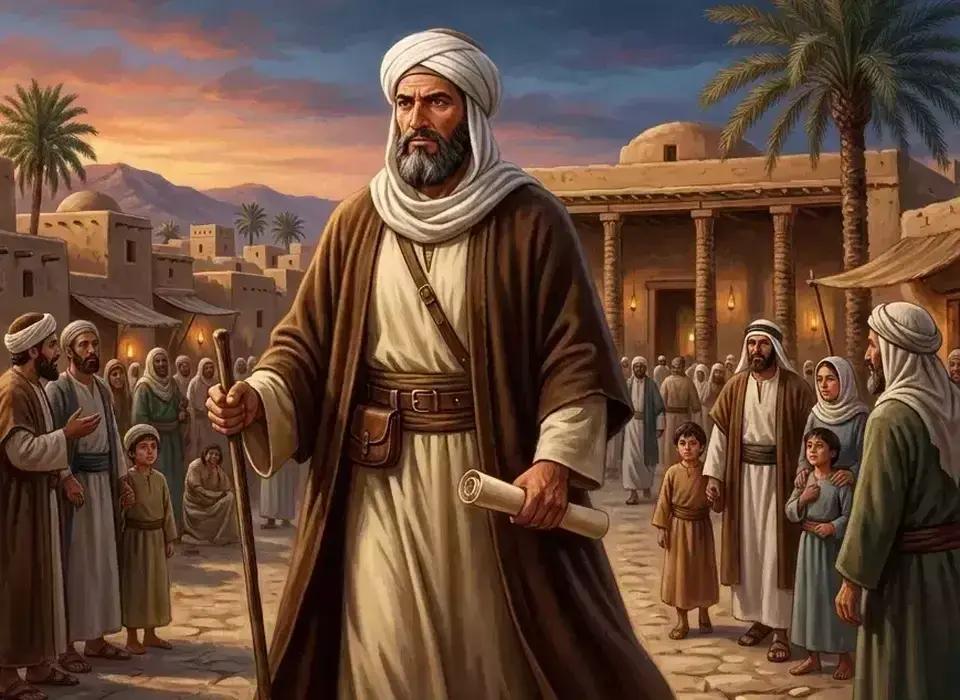
Umar ibn al-Khattab faced exactly that between 634 and 644 CE. He became the second caliph after the Prophet Muhammad’s death and immediately inherited an empire in fast motion, with Muslim forces moving through Persia, Egypt, Syria, and Iraq almost simultaneously.
What strikes historians about Umar is not the military success. That happened under multiple commanders. What stands out is what he built while the expansion was still happening.
Building a State While Conquering One
The diwan came first, a registered system for tracking soldiers, administrators, and the payments owed to them. Before this existed, no real bureaucratic record keeping operated at that scale. Garrison cities at places like Basra and Kufa followed, partly military bases and partly administrative centers where the new empire could be organized and governed. Standardizing the Islamic calendar meant the whole empire could finally coordinate on timing.
Beyond administration, a primitive welfare system took shape, drawing from the treasury to support the poor, widows, and orphans. For the seventh century that was genuinely not a small idea.
Stories about him personally are worth taking with some historical caution, as is true with any ancient source material. But the stories that stuck, about him walking through Medina at night checking on ordinary people, about him living simply while governing one of the world’s largest states, became the model that every subsequent Muslim ruler was compared against whether they liked it or not.
The real lesson of his reign is not about conquest. It is about what he understood that many conquerors before and after him missed entirely. Territory without functional administration is just a problem waiting to collapse. He built the administration while still on the move.
Harun al-Rashid: What Baghdad Was and Why It Matters
Most people encounter Harun al-Rashid through One Thousand and One Nights, which is a shame because that framing makes him feel like folklore. He was not folklore. He ran the most powerful state on earth from 786 to 809 CE and governed a city that was genuinely extraordinary by any standard you choose to apply.
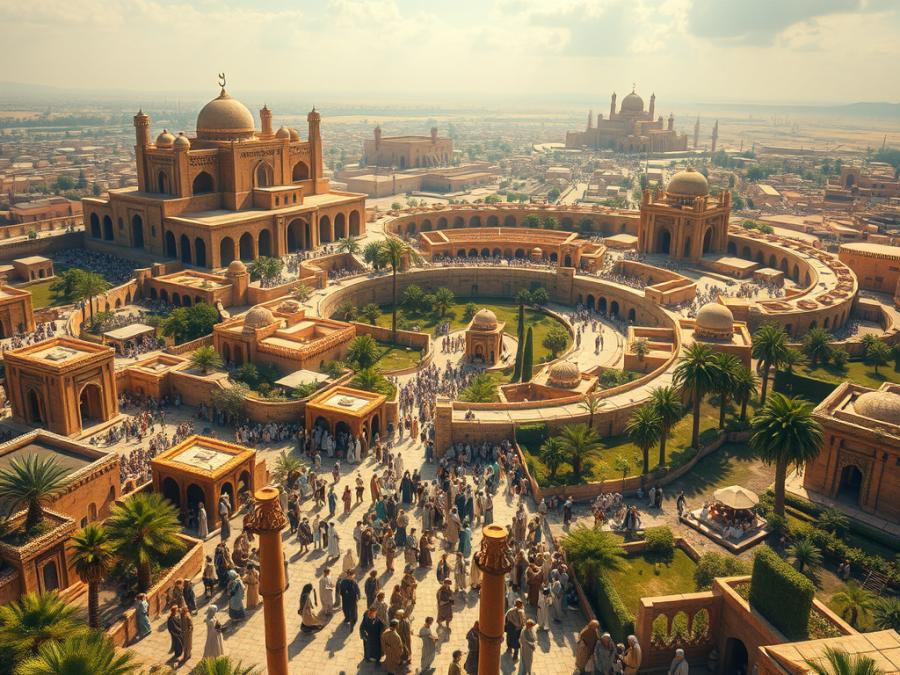
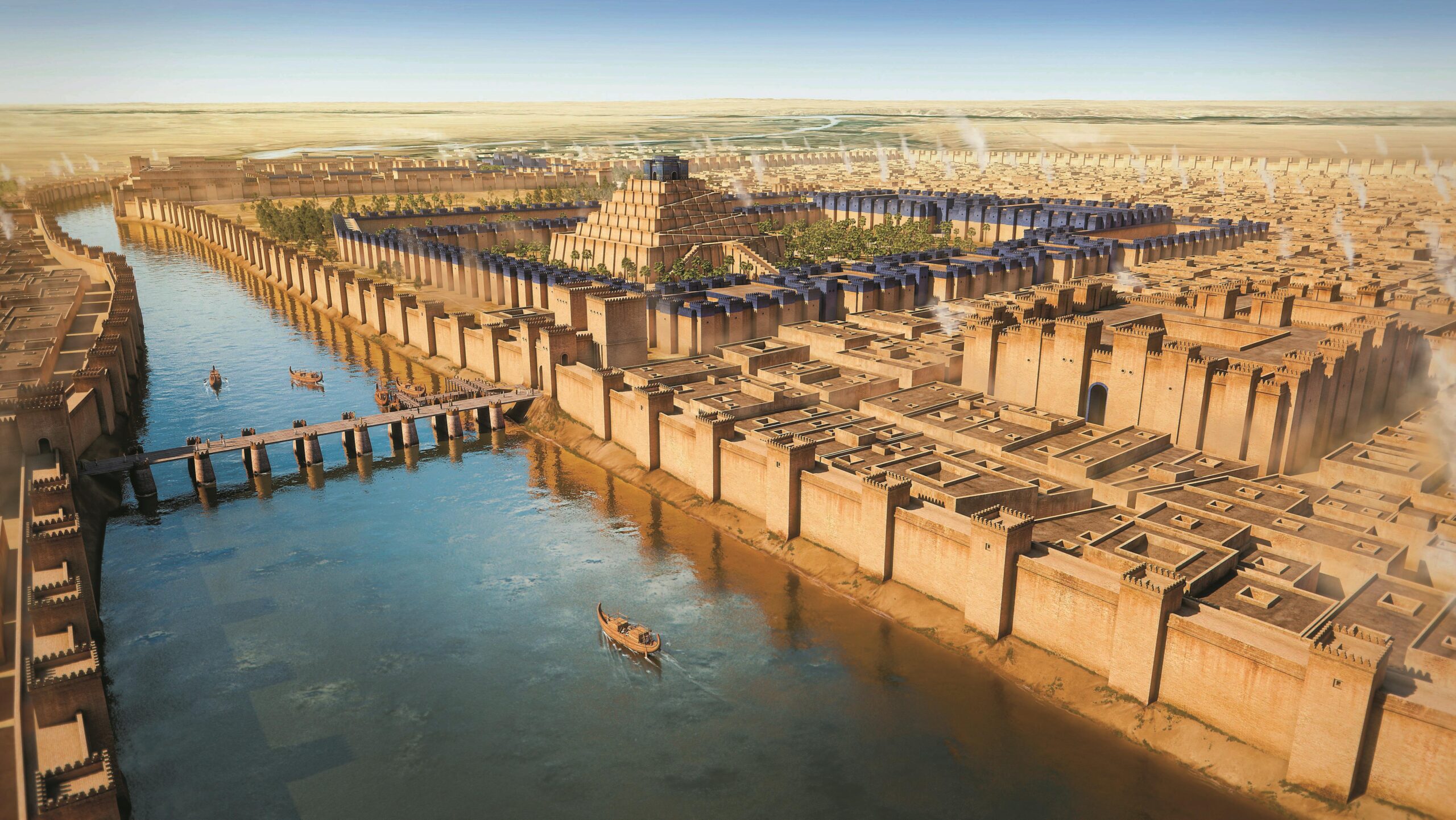
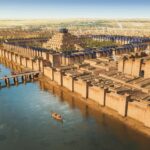
Baghdad at its peak under the Abbasid caliphs was probably the largest city in the world. Population estimates from scholars range widely but consistently put it well above anything in contemporary Europe. The infrastructure was different in kind, not just in scale. There were functioning hospitals with paid medical staff. Libraries held collections that would not be matched in Europe for centuries. Bridges, canals, markets and administrative districts organized a city that contemporaries described with obvious awe.
The House of Wisdom and What It Actually Did
The institution that matters most from this period is the Bayt al-Hikmah, usually translated as the House of Wisdom. Calling it a library undersells it significantly. Scholars came from across the known world to work there. Greek philosophical and scientific texts arrived and got translated into Arabic, which is how much of classical Greek learning survived at all. Indian mathematicians brought numerical systems and concepts including what eventually became algebra. Persian astronomical knowledge came in. The whole operation was a living synthesis project happening in real time.
Al-Khwarizmi worked there. His name gave us the word algorithm. His book on calculation gave algebra its name. These are not small contributions to human knowledge.
Harun personally exchanged embassies with Charlemagne, which puts the global reach of his court into perspective. These were the two most powerful rulers alive at the same moment, making diplomatic contact across an enormous distance. Chinese records also mention the Abbasid court. The network Baghdad maintained was genuinely international in a way that medieval Europe would not match for centuries.
His reign had its dark chapters too. The Barmakid family, a Persian dynasty that had served as his chief ministers and administrators, were suddenly arrested and destroyed late in his rule. The reasons remain murky in the sources. Political purges at the top of powerful governments are not unique to any culture or era, but the episode sits uncomfortably alongside the image of a golden age.
Still, what was built and what was learned during his reign changed the course of history in ways that ripple forward to the present day.
Saladin: The Enemy That Europeans Could Not Stop Admiring
Medieval European chronicles had strong incentives to describe Muslim leaders badly. These were holy war accounts, written to justify military campaigns and encourage continued support for the Crusades. When those same chronicles describe Saladin with admiration, it means something.
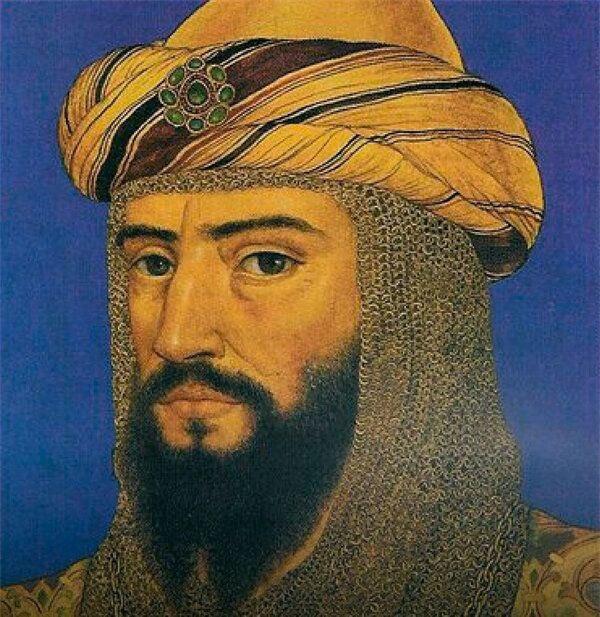
He was born in 1137 in Tikrit, a city in present-day Iraq, to a Kurdish military family. He rose through the ranks of the Zengid military establishment, eventually becoming the ruler of Egypt and Syria, and founded the Ayyubid dynasty that would outlast him by several generations.
The moment that locked his name in history was 1187, when his forces retook Jerusalem after nearly ninety years of Crusader control.
What Made 1187 Different From 1099
The contrast with the original Crusader capture in 1099 was sharp and contemporaries on both sides noticed it. When the Crusaders took Jerusalem in 1099, the killing was extensive. When Saladin took it back, he offered terms. Christian residents could pay a ransom to leave safely. Those who could not pay were sometimes ransomed by Saladin himself or his commanders. The churches were not demolished. The city did not burn.
European writers described this in detail because it confused and impressed them. Here was an enemy behaving with more restraint than their own side had shown in the same situation. Some tried to find cynical explanations. Others simply recorded what they saw.
His correspondence that survives shows a ruler who cared seriously about how he was perceived and what precedents he set. He argued about justice and legitimacy in his letters in ways that suggest these were not merely rhetorical positions. Whether a medieval ruler’s private convictions match their public statements is always uncertain, but the consistency across many years of his rule suggests the values were genuine at least in operational terms.
Richard I of England spent years fighting him in the Third Crusade, never managed to retake Jerusalem, and apparently communicated with Saladin throughout in terms that acknowledged mutual respect. Two men on opposite sides of a religious war finding a way to recognize each other’s quality across the battlefield is not the most common outcome.
Suleiman the Magnificent: Forty Six Years and a Legal Revolution
Longevity in power plus genuine competence is a rare combination. Suleiman I had both, ruling the Ottoman Empire from 1520 to 1566, long enough to see the consequences of his own decisions and adjust.
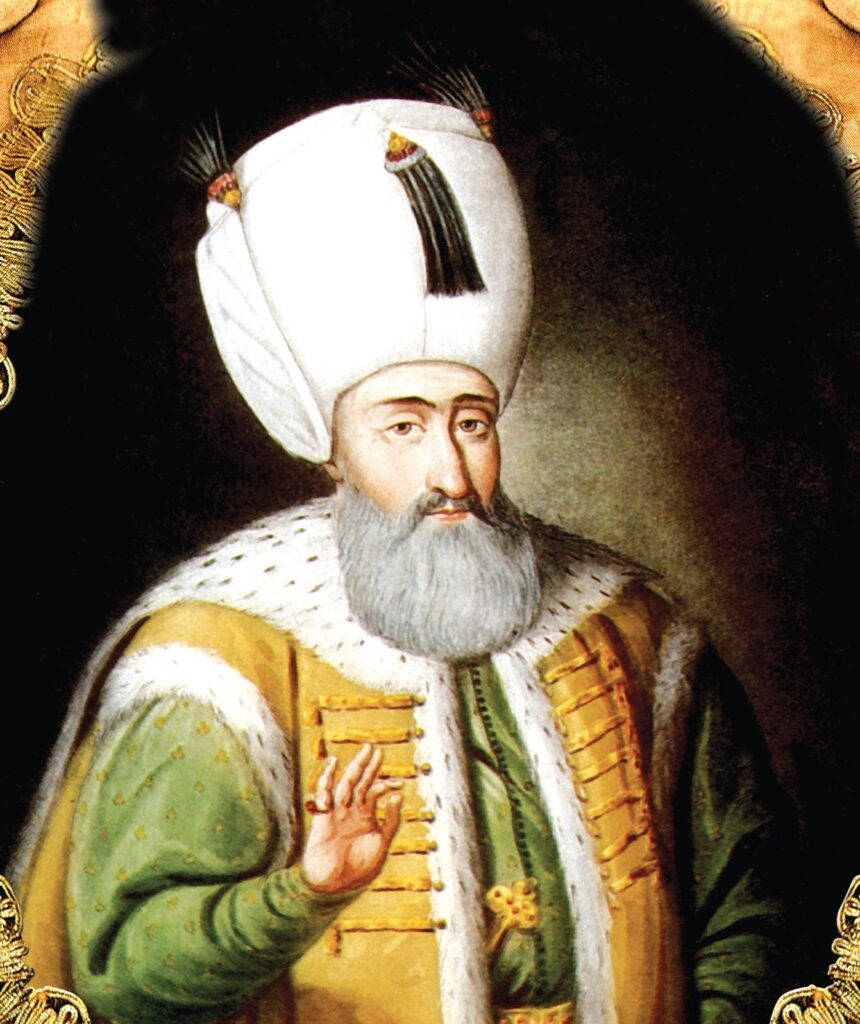
The empire he governed at its peak stretched from Hungary to Yemen, from Algeria to Persia. Vienna came very close to falling to Ottoman forces in 1529. Had it fallen, the history of Europe diverges in ways that are genuinely difficult to trace from here.
Western sources called him “the Magnificent” and focused on the splendor of his court, which was real and intentional. His own subjects called him Kanuni, which means the Lawgiver, and that title points at something more important. His legal reforms organized and codified governance across an enormous, diverse empire in ways that created consistency and predictability where there had been regional variation and contradiction. Land law, taxation, criminal procedure, administrative structure: all of it got systematized in ways that outlasted his reign by a long time.
The Architecture and the Marriage That Broke Convention
Architecture under Suleiman reached a level that still stops people dead. His court architect Mimar Sinan built the Suleymaniye Mosque in Istanbul and hundreds of other structures across the empire, working across roughly fifty years and producing buildings of extraordinary sophistication. The Suleymaniye is still one of the most beautiful buildings in the world and it was built in the 1550s.
His marriage to Hurrem Sultan is worth mentioning because it broke convention in ways that were genuinely noticed at the time. She was a concubine who became his legal wife, which Ottoman tradition did not typically permit. She exercised real political influence for decades and their surviving correspondence shows genuine emotional connection rather than just political alliance. In an era when elite marriages were almost entirely strategic, their relationship stands out.
His reign was not clean of darkness. He had his eldest son Mustafa executed in 1553 under circumstances that his contemporaries argued about and historians still debate. He had his grand vizier Ibrahim Pasha, a close friend of decades, killed in 1536. Long reigns and concentrated power tend to produce these moments regardless of the ruler’s other qualities.
What lasted beyond those shadows was a legal and institutional structure that shaped the Ottoman Empire for generations and influenced governance across a huge chunk of the world.
Akbar: The Emperor Who Tried Something Genuinely Difficult
Governing religious diversity without enforcing conformity is hard enough now with all the philosophical and legal frameworks modern states have developed for it. Akbar attempted it in sixteenth century India with none of those frameworks, and he got further than most people realize.
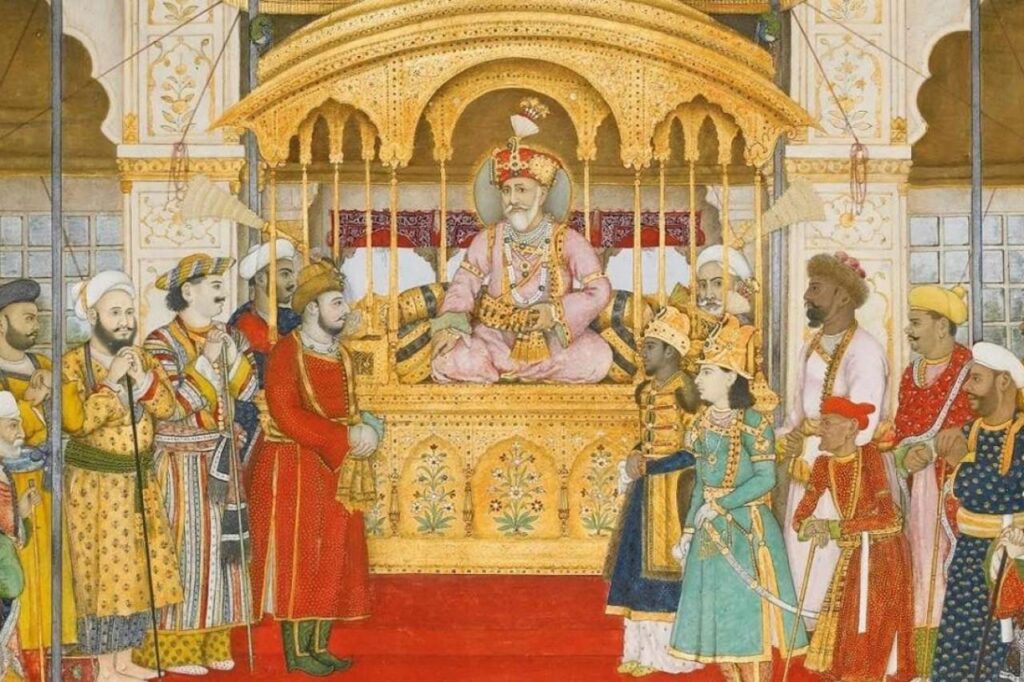
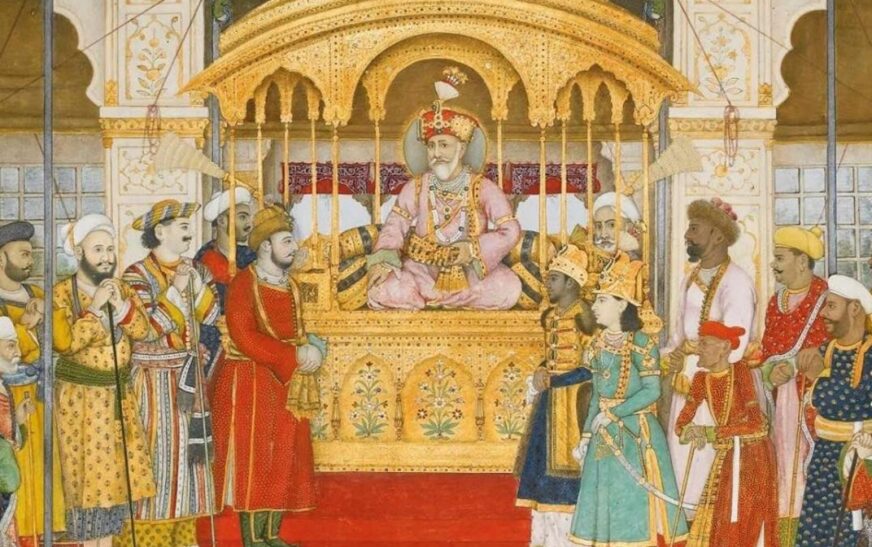
He ruled the Mughal Empire from 1556 to 1605, over a population that was majority Hindu with significant Muslim, Jain, Sikh, Christian, and Zoroastrian communities woven through it. The standard approach for Muslim rulers in that situation had varied between outright persecution and a toleration that still imposed extra taxes and legal disabilities on non-Muslims. Akbar went a different direction.
The jizya, the special tax non-Muslims traditionally paid, got abolished under his rule. Scholars from Hindu, Jain, Christian, and Zoroastrian traditions received invitations to his court to debate theology in a building he specifically constructed for that purpose, called the Ibadat Khana, or House of Worship. Rajput Hindu women became his wives and he engaged with their traditions with genuine curiosity rather than reluctant tolerance. Administrative appointments crossed religious lines entirely, based on competence rather than faith.
Late in his reign he developed something he called Din-i-Ilahi, a personal religious synthesis drawing on multiple traditions. It never spread widely and essentially died when he did, but the project itself reveals a mind genuinely wrestling with religious questions rather than simply administering them.
Historians argue about how to read him. Was it genuine pluralism or just smart governance for a ruler who needed Hindu cooperation to function? The honest answer is probably both, and the distinction matters less than people sometimes assume. Governance that actually produces tolerance and treats people equitably regardless of motivation is different from governance that preaches tolerance while practicing something else.
The Revenue Reform Nobody Talks About
His revenue system reform, designed by his finance minister Todar Mal, created a more rational basis for agricultural taxation that reduced exploitation while actually increasing state revenues. His military record expanded Mughal territory substantially. On almost every dimension of governance he was operating at a high level simultaneously.
Mansa Musa: The Journey That Broke Egyptian Economics
In 1324, Mansa Musa left Mali for the hajj. He traveled with a caravan that contemporary accounts describe in numbers so large they read like legend. Thousands of soldiers, thousands of servants, camels carrying enormous quantities of gold, the kind of procession that made every city it passed through stop and stare.
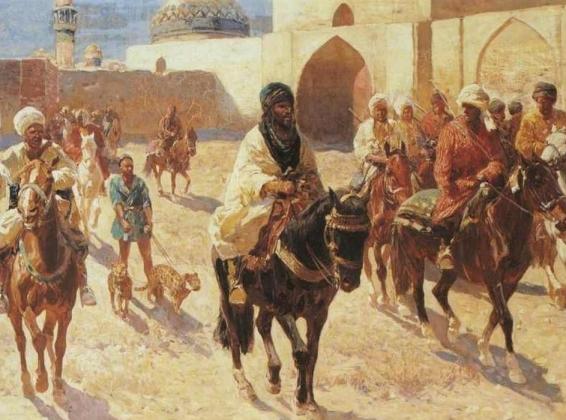
He distributed gold generously along the route through Egypt and into the Hijaz. He paid for buildings, gave gifts to scholars, and spent lavishly by any standard. The result was that he flooded the regional economy with gold at a rate that caused measurable inflation in Egypt for years after his journey. Medieval economists recorded this effect, which is remarkable evidence of how much gold he brought.
Mali under Mansa Musa controlled the most important gold and salt trade routes in West Africa. The empire’s wealth was not just nominal. It powered the construction of mosques and schools, supported scholars and craftsmen, and made Timbuktu one of the genuinely significant centers of Islamic learning in the world. The manuscript collections of Timbuktu, many of which survive today in fragile condition and are a major preservation challenge, represent centuries of scholarship that most of the world has barely begun to engage with.
Timbuktu and the Maps That Remembered Him
Abu Ishaq al-Sahili, the architect Mansa Musa brought back from his hajj journey, introduced building techniques that influenced West African Islamic architecture in ways still visible in structures standing today. influenced West African Islamic architecture in ways visible in structures that still stand.
Fourteenth century European maps include Mansa Musa. Cartographers in Catalonia and Italy drew him sitting on his throne holding a gold nugget, labeled and prominent on maps of the African continent. That cartographic presence is evidence of how far his reputation traveled even in his own lifetime.
Most people who went through standard Western history education can name a dozen European medieval rulers without pausing and struggle to name one African ruler from the same period. That is a gap in the education, not a gap in the history.
What You Actually Notice When You Look at All of Them Together
Pulling back and looking at these figures as a group produces a few observations worth sitting with.
None of them won or kept power through military strength alone. Every one of them built something institutional that outlasted the immediate campaign. Umar built administration. Harun built intellectual infrastructure. Suleiman built legal systems. Akbar built inclusive governance structures. Mansa Musa built scholarly institutions and international connections. The pattern is consistent enough to be a lesson rather than a coincidence.
Each of them governed enormous religious and ethnic diversity without the option of just making everyone the same. The approaches differed, Akbar was genuinely more pluralistic than most, but all of them had to develop practical systems for governing people who did not share their faith or culture. That practical problem shaped the kinds of institutions they built.
None of them were simple. Saladin, who showed mercy at Jerusalem, also executed prisoners at other points in his campaigns. Suleiman, who built magnificent legal systems, killed his own son. Akbar, who created frameworks for religious coexistence, conducted military campaigns that were not characterized by mercy. This does not cancel out the other things. It just means they were actual human beings exercising power in complex circumstances, which is what history contains rather than the simplified versions that fit more cleanly into a lecture period.
Books Worth Reading If This Opened Something Up
Tamim Ansary wrote “Destiny Disrupted: A History of the World Through Islamic Eyes” for a general audience and it is probably the most readable single-volume overview of this entire sweep of history available in English. No prior background required.
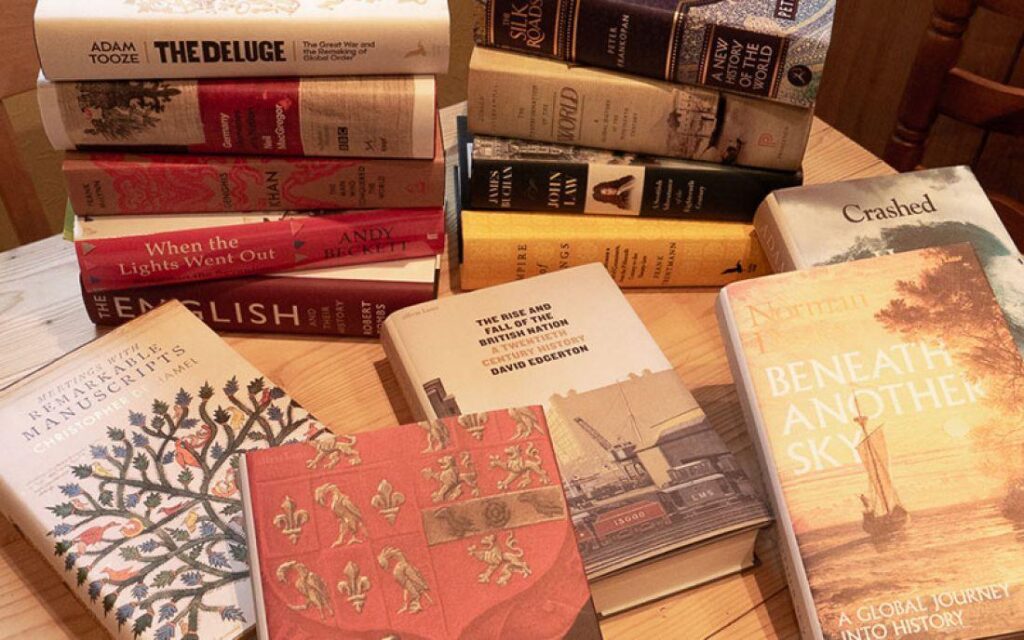
Alan Mikhail’s “God’s Shadow” covers Suleiman and the Ottomans specifically, arguing that Ottoman history shaped European history far more than standard accounts acknowledge. William Dalrymple has written multiple books on Mughal India that read like good narrative history rather than academic obligation.
For primary sources, the Library of Arabic Literature project is producing bilingual Arabic and English editions of classical texts that are genuinely accessible. Reading how these rulers and their courts understood themselves, rather than only reading later analysis, changes the texture of the history considerably.
The “History of the Islamic World” series from various academic publishers goes deeper if you get interested enough to want more than narrative overview.
Why Knowing This Actually Changes Things
There is a practical reason to know this history beyond the intrinsic value of knowing true things.
A significant portion of the news and political conversation that shapes foreign policy decisions in most Western countries involves regions where these empires operated. The Middle East, South Asia, West Africa, Central Asia. The current borders, ethnic compositions, religious distributions, and political cultures of these regions cannot be understood without knowing what preceded them. That is not an argument for any particular policy position. It is just a basic claim about what context looks like.
The Science Connection Most People Miss
The scientific contributions that flowed through the Islamic world are similarly not just historical curiosity. Algebra, optics, pharmacology, astronomical tables that made navigation possible, surgical techniques, the preservation and extension of classical Greek thought: these moved into European universities and practice and became foundational to the scientific revolution. Knowing that the channel existed changes how you understand where modern science came from.
That freshman class changed something permanent for me. Not because it gave me a political argument to deploy, but because it made the history of the world make more sense. Things that had seemed to appear from nowhere turned out to have long explanations. People I had never heard of turned out to have shaped things I use every day.
That is worth knowing. And it turns out it is genuinely interesting, which helps.