


A few years ago, I watched a tiny coffee shop near my old office outsell a much bigger, better-funded chain location two blocks away. The chain had more seating, a slicker interior, and a marketing budget that probably equaled the smaller shop’s entire annual revenue. Yet every morning, the line at the small shop stretched out the door while the chain location stood half empty.
I got curious enough to actually ask the owner what she thought was happening. Her answer surprised me. She did not mention her coffee quality, though it was genuinely excellent. She mentioned that she remembered names. Regular customers walked in, and she already had their order half made before they reached the counter.
That tiny habit, repeated hundreds of times a week, built something the chain could not replicate with its budget. Loyalty does not show up on a balance sheet, but it shows up in foot traffic, and foot traffic shows up in revenue.
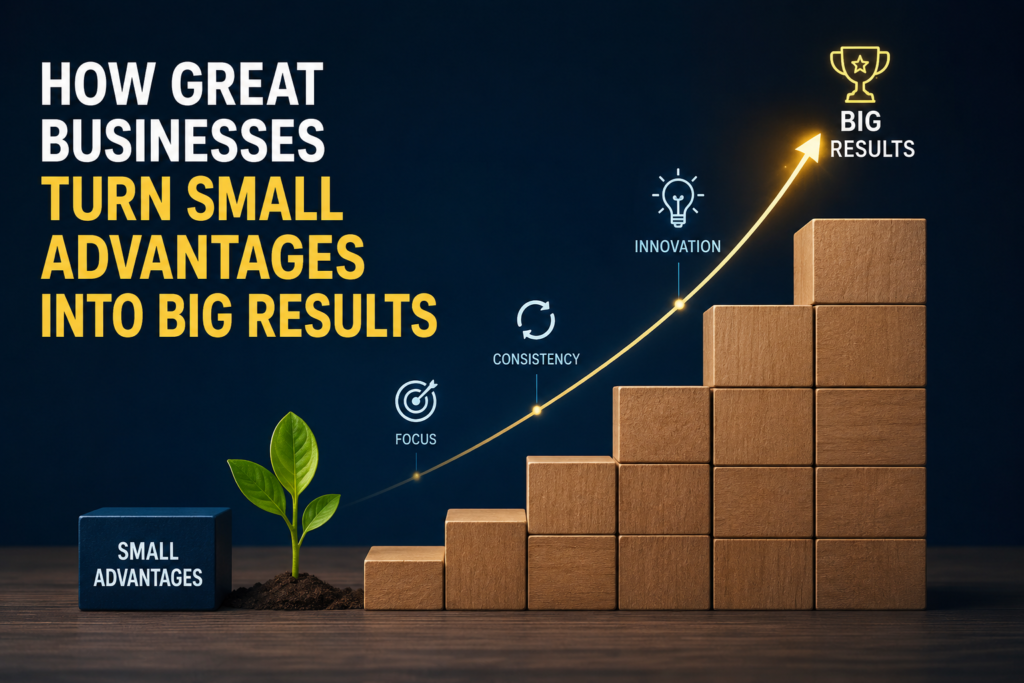
That experience changed how I think about business advantage entirely. Big wins rarely come from one massive breakthrough. They come from small edges, compounded relentlessly over time.
Why Small Advantages Matter More Than People Think
Most business advice focuses on big swings. Launch a new product line. Enter a new market. Raise a massive funding round. These moves get attention because they make for exciting headlines, but they are not actually how most successful businesses grow.
Small advantages work differently. They feel almost invisible in the moment. Responding to a customer email twenty minutes faster than your competitor. Packaging a product slightly more thoughtfully. Writing a follow-up message that feels personal instead of automated.
Individually, none of these moves look impressive. Stacked over months and years, they create a gap between businesses that feels enormous from the outside, even though it grew from dozens of tiny decisions made consistently.
Warren Buffett has talked about this idea using the language of compounding interest, and the comparison holds up well outside of finance. A 1% improvement repeated daily produces dramatically different results after a year than a single 30% improvement made once and then abandoned.
The Restaurant That Taught Me About Friction
I used to eat regularly at a small Thai restaurant that had mediocre food, honestly. The pad thai was fine. Nothing spectacular. Yet the place was consistently packed while better restaurants nearby struggled with empty tables most nights.

The difference came down to friction, or rather, the complete absence of it. Ordering took thirty seconds because the menu had eight items instead of eighty. Payment happened instantly through a tablet at the table rather than waiting for a server to bring a bill. Takeout orders placed online showed an accurate ready time that the restaurant actually honored.
None of this required brilliant cooking. It required removing every small obstacle between a hungry customer and a finished meal.
Businesses chase big differentiators constantly while ignoring friction sitting right in front of them. Reducing friction is one of the most underrated competitive advantages available, and it rarely requires major investment to fix.
Where to Find Friction in Your Own Business
Walk through your own customer journey as if you were a stranger experiencing it for the first time. Note every point where you hesitate, get confused, or feel mildly annoyed.
Check how long your website takes to load on a phone using a slow connection. Google’s PageSpeed Insights tool gives you a free, specific breakdown of exactly where delays happen.
Time how long it takes a new customer to complete a purchase from your site, start to finish. Anything over two minutes for a simple transaction usually signals unnecessary steps that customers are quietly abandoning.
Read your own confirmation emails as if you just placed an order. Confusing or robotic emails create doubt right after someone has already decided to trust you with their money.
The Power of Consistency Over Brilliance
A friend who runs a small landscaping business told me something that stuck with me for years. He said most of his competitors are talented at the work itself. What separates his business from the rest is that he shows up exactly when he says he will, every single time.
That sounds almost too simple to matter, yet it became his single biggest competitive advantage in a market full of skilled landscapers.
Customers remember reliability far more vividly than they remember excellence. A contractor who does spectacular work but shows up three days late gets remembered for the lateness. A contractor who does solid, unremarkable work but always arrives exactly on schedule earns a reputation for trustworthiness that drives referrals for years.
This applies well beyond physical services. Software companies that ship updates predictably build more trust than companies that occasionally release brilliant features alongside long stretches of silence. Email newsletters sent consistently every Tuesday outperform newsletters sent sporadically whenever inspiration strikes, even if the sporadic content is technically better written.
Turning Customer Feedback Into Compounding Improvement
Most businesses collect feedback and do almost nothing useful with it. They send a survey, glance at the results, and move on without changing anything meaningful.
The businesses that actually compound their advantage treat feedback as raw material for continuous small fixes, not as a box to check.
A clothing brand I worked with noticed a recurring complaint buried in their customer reviews. Several customers mentioned that sizing ran differently than expected, but nobody on the team had flagged it as urgent because each individual complaint seemed minor.
Once someone finally compiled every sizing complaint into a single document, the pattern became impossible to ignore. They added a simple sizing chart with specific measurements rather than vague small, medium, large labels. Return rates dropped by nearly 18% within two months.
Nothing about that fix required innovation. It required actually reading feedback closely enough to spot a pattern, then acting on it quickly.
A Simple System for Capturing Feedback That Actually Gets Used
Set up a single, centralized place to collect every piece of customer feedback, regardless of where it originates. Tools like Airtable or even a well-organized Google Sheet work fine for smaller businesses just starting this habit.
Tag each piece of feedback by category. Shipping issues, sizing issues, customer service complaints, pricing confusion, whatever themes apply to your specific business.
Review the tagged list every two weeks and look specifically for patterns rather than treating each comment as an isolated incident. One complaint about a confusing checkout page might be a fluke. Five similar complaints within a month is a fixable problem hiding in plain sight.
Pick one small fix from that list every cycle and actually implement it. Momentum matters more here than perfection. Small, consistent fixes beat occasional massive overhauls that take months to plan and execute.
How Small Teams Beat Big Budgets
A question I get asked often is how a small business with limited resources can possibly compete against a competitor with ten times the marketing budget. The answer usually surprises people because it has very little to do with money.

Big companies move slowly by nature. Decisions pass through layers of approval. Marketing campaigns get planned months in advance and rarely adjust quickly to real-time feedback. Customer service often follows rigid scripts that frustrate people seeking a genuine human response.
Small businesses can move at a completely different speed. A founder can respond personally to a frustrated customer on Twitter within minutes. A small team can test a new product idea, get feedback within a week, and adjust immediately rather than waiting for a quarterly planning cycle.
Speed itself becomes the small advantage that compounds into something the bigger competitor genuinely cannot match, regardless of budget size.
Practical Ways to Use Speed as Your Edge
Respond to customer inquiries faster than industry norms suggest is necessary. If competitors typically respond within 24 hours, aim for under two hours. Tools like Front or even a well-managed shared inbox make this manageable without hiring a large support team.
Test small changes on your website or product regularly instead of waiting for a perfect, fully planned overhaul. Even simple A/B testing through tools like Google Optimize alternatives or built-in platform testing features on Shopify can reveal what actually works rather than relying on assumptions.
Watch what customers say on social media in real time rather than only checking scheduled reports. A tool like Mention or even basic Google Alerts set up for your brand name catches conversations happening right now that bigger companies often miss entirely.
The Compounding Effect of Small Brand Touches
Branding gets treated as something only big companies with big budgets can do well, but some of the most memorable brand moments come from small, inexpensive touches that bigger companies skip entirely because they seem too minor to bother with.

A handwritten thank-you note included with a small business’s shipment costs almost nothing but creates a moment of genuine surprise that a customer remembers and often shares. I have personally posted about small businesses online specifically because of a thoughtful touch like this, generating free word-of-mouth marketing that no advertising budget directly purchased.
A clear, friendly tone in customer service emails instead of corporate, robotic language builds warmth that customers notice immediately, even if they cannot articulate exactly why they prefer one brand over another.
Packaging that feels considered, even if inexpensive, signals care. A simple thank-you sticker or a thoughtfully designed box insert costs pennies but shapes how a customer perceives the entire unboxing experience.
None of these touches alone will transform a struggling business. Layered together and repeated consistently across every single order, they build a brand reputation that feels distinctly different from competitors offering a similar product at a similar price.
Common Mistakes That Kill Small Advantages Before They Compound
A few patterns show up repeatedly in businesses that try this approach and then quietly abandon it within a few months.
Inconsistency kills compounding faster than almost anything else. A business owner gets excited about responding quickly to every customer message for two weeks, then slowly slips back into old habits once the initial enthusiasm fades. Small advantages only compound when they become genuine habits rather than temporary bursts of effort.
Chasing too many small improvements simultaneously creates a different problem. Trying to fix sizing issues, speed up shipping, redesign packaging, and overhaul customer service emails all in the same month spreads effort too thin to execute any single change well. Picking one or two priorities at a time and finishing them properly beats scattering energy across everything at once.
Ignoring measurement is another common trap. A business makes a small change, feels good about making it, and never actually checks whether it moved any meaningful metric. Without tracking results, even genuinely good changes get abandoned too early because nobody can see whether they worked.
Copying a competitor’s small advantage without understanding why it worked for them specifically often backfires. The coffee shop owner who remembered customer names succeeded because her shop had a tight, repeat local customer base where personal recognition genuinely mattered. That same tactic would matter far less for a business serving mostly one-time customers from out of town. Context determines whether a small advantage will actually compound or simply waste effort.
Building Your Own System for Small, Compounding Wins
Getting started does not require a major strategic overhaul. It requires picking a manageable starting point and building genuine consistency from there.

Begin by mapping out your customer’s actual experience from first contact through repeat purchase. Write down every single touchpoint honestly, including the awkward or slow parts most businesses prefer not to examine closely.
Identify three points of friction or missed opportunity within that journey. Not thirty. Three specific, fixable problems you can realistically address within the next month.
Fix one of those three problems completely before moving to the next. Resist the urge to tackle all three simultaneously, since partial fixes rarely compound the way fully completed fixes do.
Measure whatever metric connects most directly to that specific fix. If you improved your checkout process, track cart abandonment rate. If you improved response times, track customer satisfaction scores or repeat purchase rate over the following month.
Repeat this entire cycle every month, treating it as an ongoing habit baked into how your business operates rather than a one-time project that eventually gets marked complete and forgotten.
Real Businesses Built Almost Entirely on Small Advantages
Trader Joe’s built a wildly successful grocery chain partly on the small advantage of employees who actually engage customers in genuine conversation rather than reciting scripted greetings. That single cultural choice, repeated across thousands of daily interactions in every store, built a loyal following that larger grocery chains with far more locations have struggled for years to replicate.

Zappos built its early reputation almost entirely on customer service response speed and a willingness to go slightly further than competitors, like covering return shipping costs without hesitation or question. Neither move required massive capital. Both became core to a brand that eventually sold to Amazon for over a billion dollars.
A local example closer to home: a bakery I frequent started including a small recipe card with seasonal ingredient tips inside every order. Nothing groundbreaking, just a thoughtful, low-cost touch repeated consistently. Customers started sharing photos of the cards online without being asked, generating organic marketing that the bakery never had to pay for directly.
None of these examples involved one single dramatic breakthrough moment. Each involved identifying a specific small advantage and then committing to it relentlessly, long enough for the compounding effect to become visible.
Final Thoughts
Big results rarely arrive through one perfect decision made at exactly the right moment. They build slowly, through small advantages repeated so consistently that they eventually become invisible to the business itself while becoming impossible for customers to ignore.
The coffee shop owner who remembered names was not running a sophisticated loyalty program. She was simply paying attention, consistently, in a way her bigger competitor structurally could not replicate.
Pick one small friction point in your own business this week. Fix it completely, measure what happens, and then move to the next one. Repeat that pattern long enough, and the gap between your business and your competitors will start looking like something far bigger than the sum of its small, individual parts.