

(From Someone Who Got a Few Wrong First)
A few years back, I made the mistake of pouring money into a flashy office space before my business had any real traction. Nice chairs, a coffee machine, plants everywhere. It looked great on Instagram. It did nothing for revenue. That lesson cost me more than I want to admit, but it taught me something that I now consider the most valuable business lesson I have ever learned: not all investments are created equal.
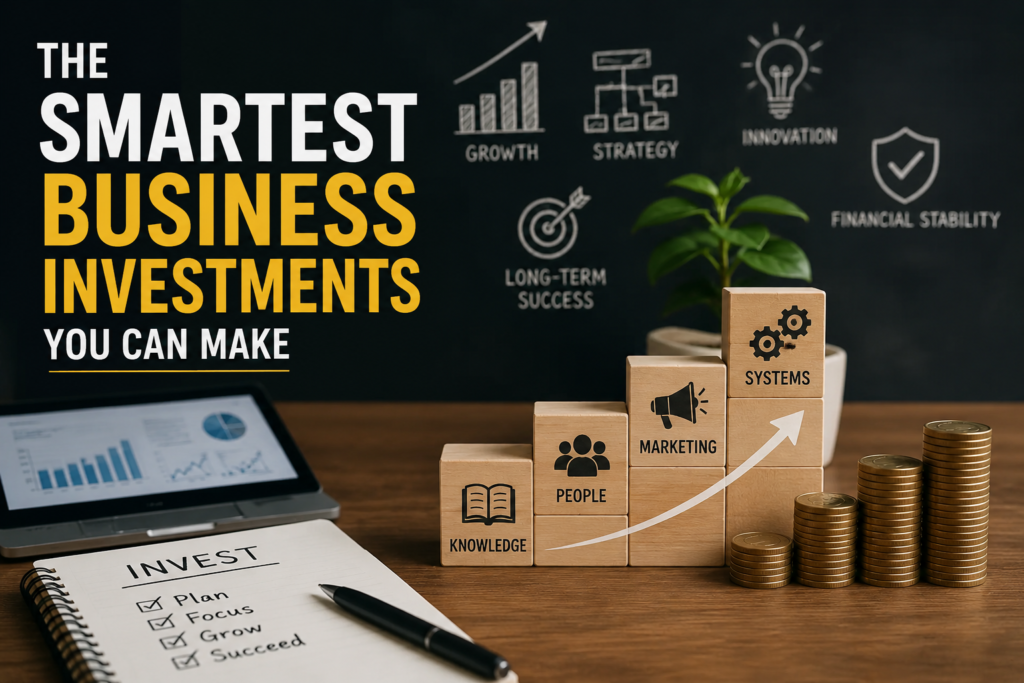
Some spending builds your business. Other spending just makes you feel like you are running a business.
Since then, I have been obsessive about knowing the difference. What follows is not a textbook breakdown. It is what actually worked, what flopped, and what I wish someone had told me before I signed that office lease.
Why Most Business Spending Does Not Qualify as Investment
People throw the word “investment” around loosely. A new logo? Investment. Branded mugs? Investment. A team retreat to Bali? Somehow, investment.
Real investment is spending that comes back to you multiplied. It creates a return, whether that return is more customers, faster operations, higher prices you can charge, or a team that does not burn out every six months.
The question worth asking before any major spend is simple: will this make us more money than it costs, and within what timeframe? If you cannot answer that clearly, you are probably looking at an expense, not an investment.
Investing in Skills: Yours and Your Team’s
This one sounds obvious until you realize how few business owners actually do it consistently.
Early on, I treated training as a cost. Something you do when you have extra budget. The shift happened when I started treating it as infrastructure. The skills your team carries around in their heads are assets that show up every single day.
One specific example: I paid for a copywriter on my team to take a proper email marketing course. Not a free YouTube playlist, an actual structured program. Within three months, our email open rates climbed from 18% to 31%, and revenue from email campaigns nearly doubled. The course cost around $500. The return was thousands.
The same logic applies to you as the owner. If you are terrible at reading financial statements, fix that. If you do not understand your customer acquisition cost, learn it. The skills gap at the top of a business tends to flow down.
Practical tools here: Coursera, Maven, Reforge, and MasterClass Business are all worth exploring depending on your industry. For technical skills, Udemy often has deep, practical courses for a fraction of what you would pay elsewhere.
Hiring Before You Feel Ready
Here is the uncomfortable truth. Most founders wait too long to hire. They want to be sure the business can afford it. By the time they feel sure, they have already lost months of growth doing tasks someone else could have handled.
The smartest business owners I have watched up close hire slightly ahead of need. They bring someone in when they can see the role is going to be necessary, not after the bottleneck has already strangled the operation.
The caveat is that you need to hire for leverage. The first hires that make the biggest difference are usually not glamorous. An operations coordinator who handles the admin chaos. A customer support person who frees you from inbox triage. A part-time bookkeeper so you stop avoiding your numbers.
What makes this a smart investment rather than just overhead is specificity. Hire people who free up your highest-value time. Every hour you spend doing work a $20/hour person could do is an hour you are not doing work only you can do.
Where people go wrong is hiring too senior too soon (a VP of Marketing when you still need someone to post to social media), or hiring friends without real vetting, or bringing people on without clear roles. All three are expensive mistakes.
Technology That Actually Earns Its Cost
Software subscriptions have a way of stacking up. Most businesses I have seen are paying for tools they barely use, while skimping on the ones that would genuinely move the needle.

The framework I use now is simple: does this tool save time, increase revenue, or reduce errors? If it does at least one of those things meaningfully, it earns its seat.
Some tools that have genuinely been worth it in my experience:
A solid CRM is not optional if you are doing any relationship-based selling. HubSpot’s free tier is legitimately good for early-stage businesses. As you grow, upgrading makes sense. Losing track of leads because you are managing them in a spreadsheet is a silent revenue killer.
Project management software like Notion, ClickUp, or Asana sounds like basic stuff, but the difference between a team using one consistently versus a team using email threads and mental notes is enormous in practice. Things stop falling through the cracks. Accountability gets clearer. Onboarding new people becomes faster.
Accounting software like QuickBooks or Xero is the one I see founders skip most often in the early stages. They do their own books, badly, and then either miss tax deductions or get surprised by cash flow problems. The $30 to $50 a month is not the cost. The cost of not having clean financials is much larger.
One thing worth saying plainly: do not buy tools because they are popular. Buy them because you have a specific problem they solve. The tool graveyard in most businesses is full of things purchased after watching someone else talk about them on a podcast.
Building Systems Instead of Just Solving Problems
This is where a lot of small business owners leave serious money on the table. Every time something goes wrong, they fix it and move on. Smart businesses fix the problem and then build a system so it cannot happen the same way again.
Systems are an investment because they pay out every single time that process runs. A documented onboarding process for new clients might take you a day to build. Over the next two years, it saves hours of confusion on every new project and makes the client experience consistently better.
Documenting your processes does not require anything fancy. Loom is excellent for recording walkthroughs. Notion or Google Docs work fine for written procedures. The key is actually capturing how things should be done while the person who knows is still around to explain it.
One example from my own business: we lost a major client partly because our handoff process between sales and delivery was a disaster. The salesperson knew things the delivery team did not. Nobody wrote anything down. After losing that client, we built a handoff document template and a checklist that runs automatically through our project management tool when a deal closes. We have not had that problem since.
Marketing Investment That Builds, Not Just Buys
There are two kinds of marketing spend. One buys you attention for as long as you keep paying. The other builds something that keeps working after you stop. Both have their place, but too many businesses lean entirely on the first type.
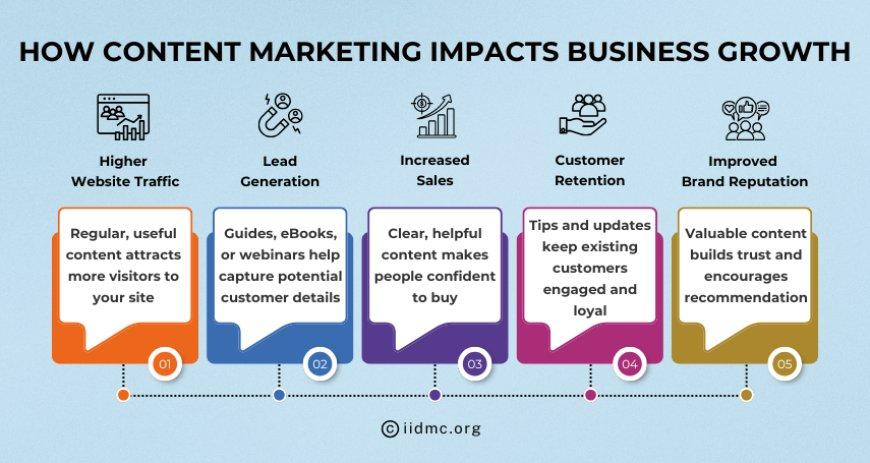
Paid ads on Google or Meta can absolutely work. But the moment you stop paying, the results stop too. Content marketing, email lists, SEO, community building, and reputation development all compound over time.
The smartest move for most small businesses is building owned channels alongside any paid strategy. Your email list is yours. Your SEO rankings, once earned, keep sending traffic. A YouTube channel or podcast that establishes you as an authority in your space becomes a long-term asset.
This does not mean abandoning paid ads. It means not making them your only strategy. A business with 10,000 engaged email subscribers and strong organic traffic is in a fundamentally different position than one that relies entirely on keeping the ad spend turned on.
SEO is worth taking seriously even if it sounds slow. Tools like Ahrefs, Semrush, or even the free version of Ubersuggest can help you understand what your potential customers are searching for. Writing content that actually answers those questions, consistently, builds traffic that does not disappear when your budget tightens.
Your Own Health and Energy (Yes, This Counts)
Nobody puts this on business investment lists, and it should be at the top of more of them.
The CEO or founder who is constantly exhausted, skipping meals, never exercising, and running on caffeine and anxiety is not an asset to the business. They are a liability. Decisions made from depletion are rarely good decisions.
Investing in your own physical and mental wellbeing is not separate from your business strategy. It is part of it. A trainer, a therapist, a regular vacation, whatever resets you and keeps you thinking clearly, these are not luxuries. They are operating costs.
I learned this one the hard way after a particularly brutal stretch where I was working eighteen-hour days thinking I was doing the right thing by the business. I burned out badly. Recovery took months. The business took on water during that time in ways that would have been entirely preventable if I had maintained some basic sustainability in how I operated.
Customer Experience: The Investment Everyone Underpays
Getting a customer is expensive. Keeping one costs a fraction of that. Businesses that genuinely invest in the experience their customers have are building something that competitors find hard to replicate.

This is not just about being nice. It is about being reliable, responsive, and making people feel like their business actually matters to you. The tools are not complicated. A good helpdesk setup (Intercom, Freshdesk, or even a well-managed shared inbox works for smaller operations), proactive communication, and following up after delivery all make a difference.
The return on customer experience investment shows up in two places: reduced churn and increased referrals. Both are worth real money. A client who stays for three years instead of one and refers two more people along the way is worth multiples of what a one-off transaction brings in.
Common Mistakes Worth Avoiding
A few patterns I see repeatedly that are worth calling out clearly.
Investing in brand before product-market fit is a common one. Spending heavily on a beautiful brand identity when you have not yet confirmed that people actually want what you are selling is getting the order wrong. Figure out what works, then make it look good.

Chasing the newest tool or trend without a clear use case is another. The business world right now is full of noise about AI tools, automation platforms, and productivity systems. Some of them are genuinely useful. Many of them are distractions dressed up as innovation. Before adopting anything new, ask what specific problem it solves and how you will know it is working.
Underinvesting in legal basics early is one that creates expensive problems later. A proper business structure, contracts with clients and vendors, and basic intellectual property protection are not exciting, but cleaning up legal messes after the fact costs far more than getting it right upfront. One good conversation with a business attorney early on is almost always worth it.
Skipping financial mentorship is the last one worth naming. A lot of founders figure out the product and the marketing, but stay fuzzy on the financial side. A fractional CFO, a good accountant who actually explains things, or even a business mentor who understands numbers can change how you see your entire operation. The decisions get sharper when you know what the numbers are actually saying.
Where to Start If You Are Feeling Overwhelmed
Not everything on this list needs to happen at once. Trying to do all of it simultaneously is its own kind of mistake.
A useful starting point is identifying your biggest current constraint. What is slowing your growth the most right now? If it is your own time, the hiring and systems investments belong at the top. If it is visibility, marketing investment makes sense to focus on. If it is cash flow chaos, the financial tools and expertise belong first.
Work through your constraints one at a time, and each investment you make will be sharper because it is targeting something real rather than trying to fix everything at once.
Final Thoughts
The businesses that thrive over the long run are not necessarily the ones that spent the most. They are the ones that spent on the right things at the right time. The difference between an expense and an investment is not the dollar amount. It is whether something returns more value than it costs.
That office I rented early on was an expense pretending to be an investment. Every dollar I have put into the skills of my team, into systems that run without me, into relationships with customers who come back and send others, those have paid for themselves many times over.
Pick one thing from this list that you have been putting off and do something about it this week. Even a small move in the right direction compounds over time, and time is the one thing you cannot buy back once it is gone.