

When Everything Feels Like Too Much
There was a specific Sunday afternoon when I realized something had gone quietly wrong with my life.
Not dramatically wrong. No crisis. No breakdown. Just a slow, creeping feeling that I had been running on autopilot for months and had somehow ended up very far from where I actually wanted to be. My apartment was cluttered. My phone screen time had crept up to six hours a day. My sleep was inconsistent. My eating was mostly whatever required the least thought. My weekends were disappearing into a blur of scrolling, errands, and vague plans that never quite happened.
The strange part was that nothing was obviously broken. Work was fine. Relationships were okay. From the outside, everything looked normal.
But I was exhausted in a way that sleep was not fixing, and I could not remember the last time I had felt genuinely present or genuinely satisfied with a regular day.
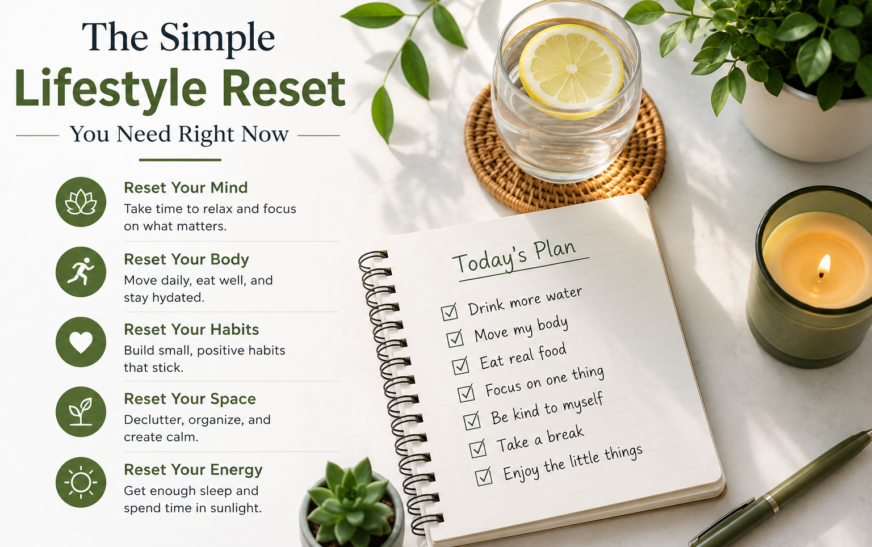
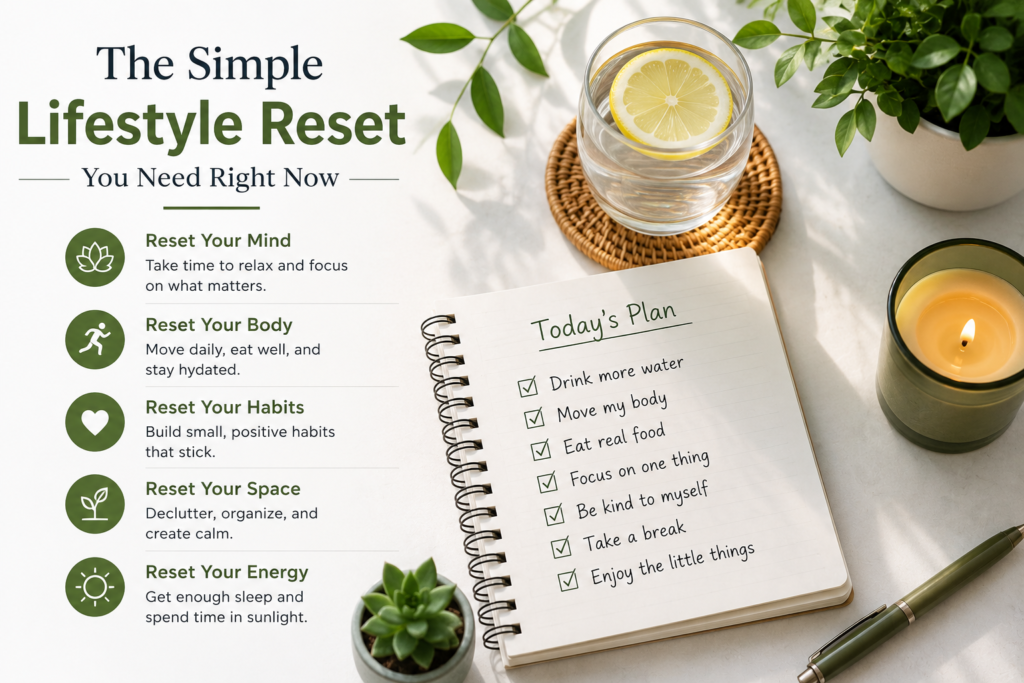
That feeling has a name, even if it does not get talked about enough. It is what happens when life accumulates too much noise, too many small bad habits, and not enough intentional structure. And the solution is not a dramatic overhaul or a six-week transformation program. It is a reset. Quiet, deliberate, practical, and completely doable.
This article is about exactly that.
What a Lifestyle Reset Actually Means
The word “reset” gets used in wellness content so often that it has almost lost meaning. So let us be specific about what it actually means here.
A lifestyle reset is not a detox. It is not a productivity system. It is not a 5 AM wake-up challenge or a juice cleanse or a complete personality reinvention.
A lifestyle reset is the process of deliberately stepping back from how you have been living, identifying the things that are draining you without giving much back, and making a small number of specific, sustainable changes in how you structure your daily life.
The word “simple” in the title is doing real work. Most lifestyle advice fails because it asks people to change everything at once. The reset described here asks you to change a few specific things carefully and stick with them long enough to feel the difference.
The First Step Is Just Noticing
Before changing anything, spend a few days paying attention to how your actual days feel rather than how you think they should feel.
This sounds obvious. Most people skip it entirely and jump straight to solutions.
Carry a small notebook or open a fresh note on your phone. At the end of each day, write down three things. What drained your energy today. What gave you energy today. What you did on autopilot that you would not have chosen consciously.
After three or four days, patterns appear that are genuinely surprising. Many people discover that the thing they thought was relaxing, scrolling, watching television without choosing what to watch, saying yes to social plans out of obligation, is actually adding to their exhaustion rather than relieving it. Many people discover the things that actually restore them are smaller and simpler than they expected.
This noticing phase is not optional. Skipping it means the reset that follows is based on guesswork rather than your actual life.
Your Sleep Is Probably the First Thing to Address
Almost every lifestyle problem is made worse by poor sleep, and almost every lifestyle improvement is amplified by better sleep. This is one of the most well-documented findings in health research, and it is one of the most consistently ignored pieces of advice people receive.
A reset that ignores sleep is working against itself from the start.
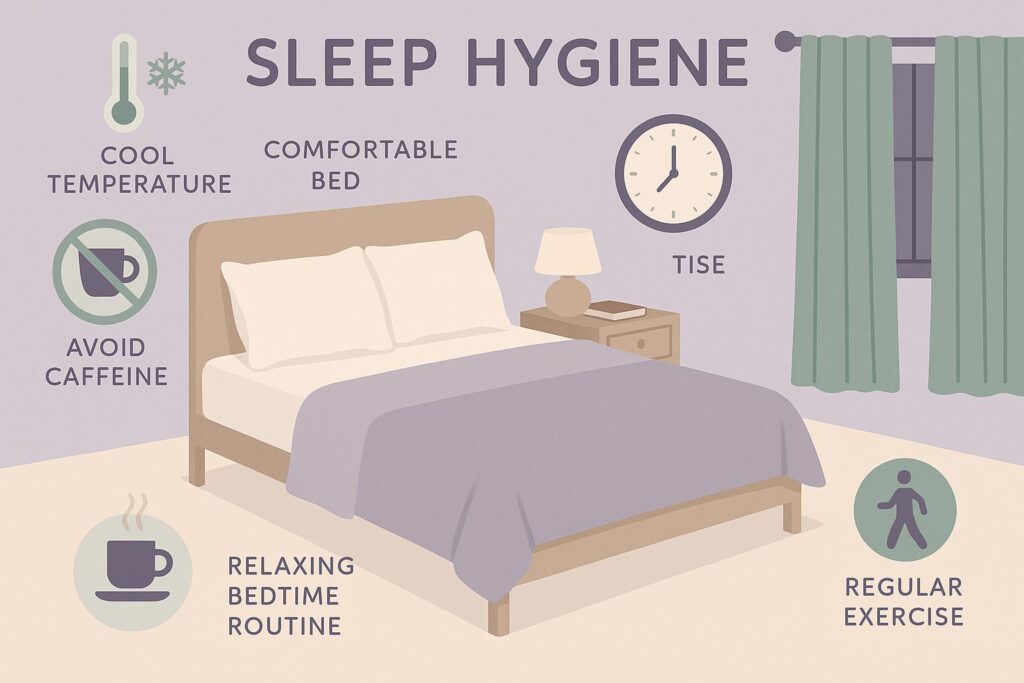
The basics are genuinely basic. A consistent sleep and wake time, even on weekends, regulates your body’s internal clock more effectively than almost anything else. Most adults function best with somewhere between seven and nine hours. The research on what happens cognitively, emotionally, and physically with chronic under-sleeping is not ambiguous.
Two things tend to disrupt sleep more than anything else for most people right now. Screens in the hour before bed, because the blue light genuinely does interfere with melatonin production, and inconsistency in timing, which keeps the body’s clock in a permanent state of mild jet lag.
The Sleep Cycle app tracks sleep patterns and wakes you during light sleep phases so you feel less groggy. The Calm app has sleep stories and meditations that work well for people whose minds race at night. Neither is magic, but both support better habits without requiring dramatic lifestyle changes to use.
If sleep has been genuinely disrupted for a long time, addressing it first makes every other reset step easier by a significant margin.
Clearing the Physical Space
Physical clutter and mental clutter are more connected than most people realize until they experience the difference.

There is legitimate research behind this. Cluttered environments increase cortisol levels, which is a stress hormone. Visual complexity constantly pulls at attention in low-level ways that add up across a day. A cluttered bedroom affects sleep quality. A cluttered workspace reduces focus.
The reset approach here is not to Marie Kondo the entire apartment in a weekend. That approach works for some people and leads to a pile of garbage bags and then no further action for everyone else.
A more effective approach is the fifteen-minute sweep. Set a timer for fifteen minutes and move through one specific area, not the whole home, with three decisions available for each item. Keep it where it is. Put it somewhere it actually belongs. Remove it entirely.
Do this once a day for two weeks with different areas. Kitchen counter. Desk surface. Bedroom floor. Bathroom cabinet. Wardrobe rail. The cumulative effect is substantial without the exhaustion of a single marathon decluttering session.
The digital version of this matters too. An overflowing email inbox, a phone home screen loaded with apps, a computer desktop covered in files all create the same low-level cognitive drag as physical clutter. Spending thirty minutes on digital clearing, archiving old emails, removing apps used less than once a month, organizing the desktop, produces a noticeable mental relief that people consistently underestimate until they do it.
The Phone Is Probably the Biggest Thing to Deal With
There is no lifestyle reset that works around an unchanged relationship with your phone. This is the piece most people know is true and most strongly resist acting on.

Average screen time for adults in most countries is between four and seven hours per day. A significant portion of that time is not chosen. It is reactive, habitual, compulsive scrolling that does not produce enjoyment, rest, or connection. People reach for their phones when they feel bored, anxious, or socially uncomfortable, and the reach usually makes all three things slightly worse rather than better over time.
The reset here does not require deleting social media or becoming a digital minimalist. It requires making phone use more deliberate and less automatic.
A few specific changes that make a real difference. Removing social media apps from your phone’s home screen and putting them in a folder several swipes away does not prevent access but breaks the automatic reach. Turning off all non-essential notifications removes the constant low-level interruption that prevents any sustained concentration. Keeping the phone out of the bedroom at night is a change that improves both sleep and morning mood in ways that feel immediately obvious within a few days.
The Screen Time feature on iPhone and the Digital Wellbeing feature on Android both show exactly where time is going and allow app limits to be set. Seeing the actual numbers without judgment is often enough to shift behavior without requiring willpower.
The goal is not to use the phone less in some morally virtuous sense. The goal is to use it when you choose to rather than when it pulls you.
Eating Simply Without Turning It Into a Project
Nutrition advice is one of the most overwhelming and contradictory categories of information available anywhere. Every few months a new framework arrives claiming to solve everything. Keto, intermittent fasting, plant-based, carnivore, Mediterranean, low-FODMAP. Keeping track of what the current consensus is supposed to be feels like a part-time job.

A lifestyle reset is not the time to overhaul your entire diet. That level of change requires significant planning, motivation, and habit restructuring that competes with everything else a reset is trying to do.
The simpler approach is to make two or three specific improvements rather than changing the whole system. Cook at home four or five nights a week instead of ordering in every night. Eat something that resembles a real breakfast rather than skipping it entirely. Drink more water by keeping a full glass on your desk or counter as a visual reminder.
Mealime is an app that generates simple weekly meal plans and shopping lists based on time available and dietary preferences. It removes the daily decision fatigue of figuring out what to cook, which is often the actual barrier more than skill or motivation.
Small consistent improvements to eating habits over weeks produce genuine results without the whiplash of an extreme dietary change that lasts eleven days before collapsing.
Getting the Body Moving Without Dreading It
Exercise is another area where advice has been made so complicated that people end up doing nothing instead of something imperfect.

The research on movement and mental health is very clear. Regular physical movement reduces anxiety, improves mood, sharpens cognitive function, and improves sleep quality. These effects do not require training for a marathon. They show up with thirty minutes of walking five times a week.
Walking is the most underrated form of exercise available. Free, accessible, joint-friendly, requires no equipment, can be done anywhere, and compounds psychologically because being outside in natural light during daylight hours also regulates the body’s circadian rhythm.
For people who want more structure, the Nike Training Club app has free guided workouts ranging from fifteen to sixty minutes across all fitness levels. Apple Fitness Plus and YouTube channels like Sydney Cummings Houdayer offer high-quality free content that requires nothing beyond a small amount of floor space.
The reset principle here is simple. Pick something you will actually do repeatedly and do it consistently for three weeks before deciding whether to change anything. Three weeks of twenty-minute walks beats one week of an ambitious gym schedule followed by nothing.
Creating a Morning That Belongs to You
The first hour of the morning tends to set the emotional tone for the rest of the day in ways that are easy to observe once you start paying attention.

A morning that begins with immediately checking notifications, reading news, and reacting to other people’s demands puts the brain in a reactive state before it has had a chance to settle. A morning that begins with even a short period of quiet, intentional activity produces a meaningfully different internal state.
This does not require waking up at five in the morning. It does not require meditation, journaling, cold showers, and an elaborate ritual. It requires protecting the first fifteen to thirty minutes of the day from incoming demands.
Specific things that work for different people: making coffee or tea slowly and drinking it without a screen. Writing three sentences in a notebook about what matters today. A ten-minute walk outside. Reading something that is not news for fifteen minutes. Stretching. Sitting quietly. None of these are revolutionary. All of them work when done consistently.
The Headspace and Insight Timer apps both offer short guided meditations for people who want structure. Neither requires prior experience or spiritual belief. A ten-minute guided meditation three mornings a week produces measurable reductions in perceived stress over four to six weeks according to several published studies.
Making Room for Real Rest
Rest and sleep are not the same thing, and conflating them is one of the reasons many people feel perpetually tired despite technically getting enough sleep.

Real rest involves activities that restore mental and emotional energy rather than simply passing time. For most people this category is smaller than they think and is being crowded out by activities that feel like rest but are not. Scrolling, binge-watching without choosing what to watch, staying in vague social situations they would rather not be in, these activities consume time without restoring energy.
Real rest looks different for different people. Reading a physical book. Cooking something elaborate. Spending time with one person rather than a group. Sitting in a garden. Drawing. Playing an instrument. Building something with hands. Watching a film chosen deliberately and watched with full attention.
The activity matters less than the quality of presence it produces. Real rest requires genuine engagement rather than passive consumption.
Scheduling specific rest time rather than waiting for it to happen naturally sounds counterintuitive but works consistently. Treating a Saturday afternoon of reading or a Sunday morning walk the same way you would treat a meeting, protecting it from being filled with tasks and obligations, is one of the most underused lifestyle improvements available.
The Social Audit Nobody Wants to Do
Relationships consume enormous amounts of energy. Some of them restore energy at the same time. Some of them simply drain it.

A lifestyle reset that ignores the social dimension is incomplete. Spending time regularly with people who leave you feeling more exhausted and diminished than when you arrived is a significant source of the background drain many people cannot quite identify.
This is not a call to cut people from your life dramatically. It is a call to notice the difference between relationships that give something back and relationships that consistently take. To spend slightly more time with the people in the first category and slightly less with the people in the second.
Most people already know exactly which relationships fit which category. They just have not made any deliberate choices based on that knowledge.
The Mistake Most Resets Make
The biggest mistake people make when trying to reset their lifestyle is attempting to change everything at once and then being surprised when it collapses within two weeks.
The motivation at the start of any reset feels unlimited. Sleep better, exercise daily, eat clean, clear the apartment, limit screen time, meditate every morning, journal every night. All of it starting Monday.
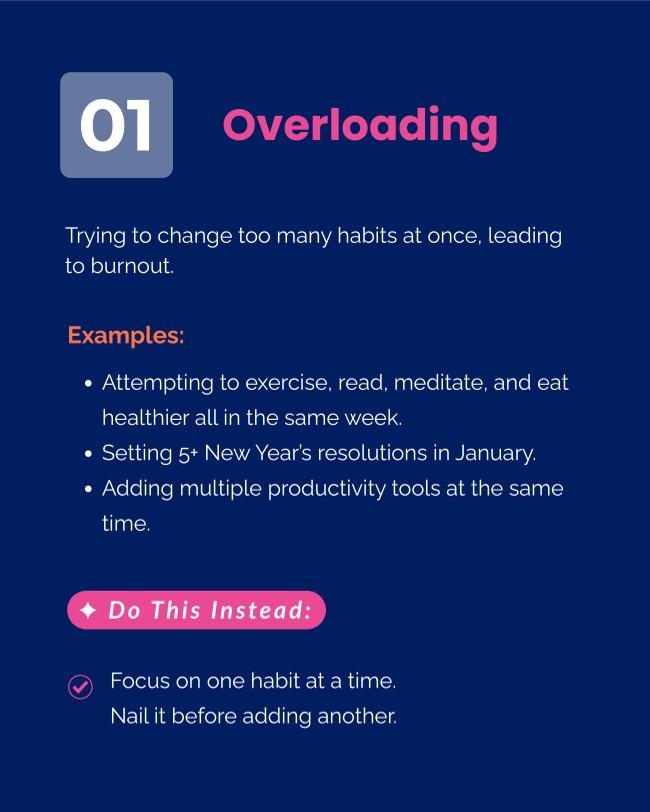
By the following Thursday, something disrupts the routine. A late work night, a social obligation, a bad night of sleep. One piece of the system falls apart. Then another. Then the whole thing is quietly abandoned and the person concludes that they are simply not capable of changing their habits.
The problem was never capability. The problem was scope.
A reset that picks two or three specific changes and builds them into consistent habits over four to six weeks before adding anything else produces cumulative results that actually last. It is less dramatic to tell people about and dramatically more effective in practice.
How to Start Without Overthinking It
If this article has triggered the familiar feeling of wanting to plan the perfect reset before beginning, that planning instinct is itself part of the pattern worth resetting.
Choose one thing from this article. Just one. The thing that most resonated, the area that felt most recognized, the change that seemed most feasible. Start it today rather than Monday. Keep it small enough that it feels slightly too easy. Do it consistently for two weeks before evaluating anything.
That is it. That is the entire starting instruction.
The phone goes in another room tonight. The fifteen-minute desk clear happens before bed. Tomorrow morning has fifteen phone-free minutes built in. One of those three things. Start there.
The Sunday afternoon that made me realize something had quietly gone wrong eventually turned into a different kind of Sunday. Not because I made dramatic changes. Because I made a few small, consistent ones and let them accumulate over time.
The reset does not transform your life in a week. It gradually brings your actual daily life back into alignment with the person you recognize as yourself. That process is slower and more ordinary than the transformation content promises. It is also real in a way that dramatic transformations rarely are.
Start small. Start today. Notice what shifts.