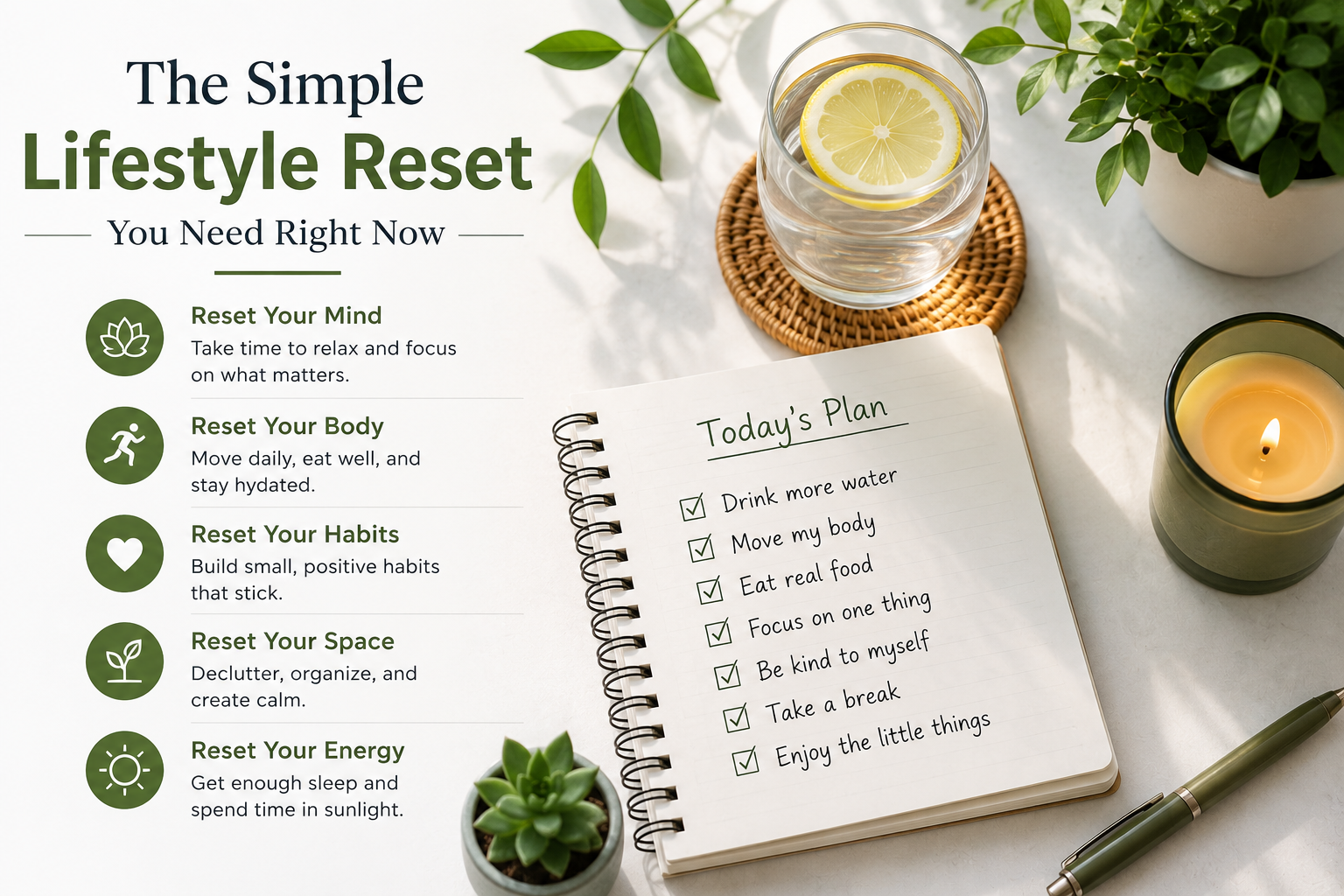


Three years ago I hit a wall that I did not see coming. Not a dramatic breakdown, nothing cinematic about it. Just a slow accumulation of tired mornings, scattered afternoons, and evenings where I could not remember what I had actually done all day. The work was getting done, technically. But I felt like I was running on a treadmill that moved slightly faster than my legs wanted to go.

A friend suggested I track how I spent my time for one week. Not optimize it, just track it. I did it reluctantly and the results were genuinely uncomfortable to look at. Roughly three hours a day went to things I could not account for. Not rest. Not recreation I actually enjoyed. Just friction and drift and scrolling and half-tasks that never got finished.
That exercise started a longer process of actually paying attention to the small repeated things that make up a day. Not grand life overhauls. Not waking up at four in the morning or meditating for an hour before breakfast. Just small consistent behaviors that either make the day better or quietly make it worse.
What follows is what actually worked, what did not, and what I still do now three years later.
Why Small Daily Habits Beat Big Dramatic Changes Every Time
Most people try to improve their lives through large interventions. New Year resolutions. Complete diet overhauls. Committing to a daily gym routine after years of nothing. These feel meaningful in the moment because the size of the commitment matches the size of the desired change.

The problem is sustainability. Large behavioral changes require enormous willpower to maintain and willpower is not a reliable resource. It depletes under stress, under fatigue, under any condition that makes the day harder than expected. When the large commitment collapses, as it usually does, the failure feels significant enough to abandon the whole project.
Small habits behave differently. A habit small enough to do even on a bad day builds consistency that eventually stops requiring willpower at all. The behavior becomes automatic, which is the whole point.
James Clear’s book Atomic Habits explains the mechanics of this better than almost anything else available. The core idea is that habits need to be small enough that skipping them feels stranger than doing them. That threshold is different for everyone and finding it for yourself takes some experimentation.
The Difference Between a Routine and a Habit
These words get used interchangeably but they describe different things. A routine is a sequence you follow intentionally. A habit is a behavior triggered automatically by a cue, often without conscious decision. The goal of building good daily habits is moving useful behaviors from the routine category into the habit category, where they happen without requiring a decision each time.
Getting dressed, brushing teeth, making coffee in the morning: for most people these are habits rather than routines because they happen without deliberation. Expanding that automatic zone to include behaviors that genuinely improve your day is the practical goal.
Morning Habits That Actually Make a Difference
Morning is where most habit advice lives, sometimes to the point of absurdity. The five-AM club, the miracle morning, the ten-step routine that takes ninety minutes before you have even eaten breakfast. Most of this advice is impractical for people with jobs, children, or any constraint on their morning time.

What actually works in the morning is not a specific set of behaviors but a specific principle: start the day with something you control before the day starts controlling you.
For some people that is ten minutes of quiet before checking their phone. For others it is a short walk. Some people journal, some make a prioritized list for the day, some just sit with coffee before the household wakes up. The specific behavior matters less than the principle of intentional time before reactive time.
The Phone Problem Nobody Wants to Admit
Checking your phone within the first few minutes of waking immediately puts you in a reactive state. Notifications, emails, news, social media: all of these hand control of your mental state to whatever happened while you were asleep. Starting the morning that way makes it significantly harder to feel settled and intentional for the rest of the day.
Keeping the phone in another room overnight is the most effective solution and also the one most people resist because the phone doubles as an alarm clock. A cheap standalone alarm clock costs around fifteen dollars and removes that dependency entirely. The Philips Wake-Up Light is more expensive but genuinely useful for people who struggle with dark winter mornings, since it simulates a gradual sunrise rather than jarring you awake with sound.
Giving yourself even twenty minutes before looking at the phone changes how the first hour of the day feels. That change accumulates over weeks into a noticeably different baseline state.
The Habit of Drinking Enough Water Before Anything Else
This sounds almost too simple to mention. Drinking water in the morning is a cliche of wellness advice. But the actual experience of doing it consistently versus not doing it consistently produces a detectable difference that is worth naming.

Most people wake up mildly dehydrated after several hours without water. Drinking a large glass of water before coffee, before breakfast, before anything else addresses that deficit immediately. The difference in how the first hour of the day feels is subtle but real, particularly in terms of mental clarity and the speed at which you feel properly awake.
Pairing the water habit with an existing behavior, making coffee, for example, means it gets done automatically rather than requiring a separate reminder. Fill a glass of water the night before and leave it on the kitchen counter. Walk to the kitchen in the morning, drink the water, then start the coffee. That sequence takes thirty seconds and requires no willpower after the first week.
Movement Every Day Does Not Mean Exercise Every Day
This distinction matters more than most habit guides acknowledge. The idea of exercising every day is ambitious enough that most people abandon it during a busy week and then feel like they have failed. The habit of moving every day is much harder to fail because movement can mean a ten-minute walk, stretching for five minutes, or taking stairs instead of a lift.

Daily movement as a non-negotiable habit, even at minimal intensity, keeps the body from the kind of total sedentary lockdown that happens when sitting at a desk for eight to ten hours. It also creates a baseline behavior that makes more intensive exercise feel natural rather than exceptional.
Building Movement Into the Day Without Adding Extra Time
The most sustainable movement habits are the ones that attach to existing activities rather than requiring separate blocks of time. Walking while taking phone calls instead of sitting. Getting off public transport one stop early. Taking a ten-minute walk after lunch instead of sitting at a desk through the full lunch break.
None of these feel like exercise. All of them add up to meaningful daily movement over weeks and months. Tracking steps with an Apple Watch, a Fitbit, or even a free app like Google Fit provides enough accountability to make the habit stick without requiring expensive gym memberships or dedicated workout time.
The research on sedentary behavior is consistent enough to take seriously. Sitting for extended unbroken periods is associated with enough negative health outcomes that adding movement breaks throughout the day is genuinely worth doing regardless of whether you also exercise separately.
Writing Things Down Changes How You Think
Journaling gets recommended constantly and practiced inconsistently because most people approach it as a big commitment. A journal should be written in daily, should be meaningful, should reflect deeply on the inner life. That framing makes it easy to skip on days when nothing meaningful is happening or deep reflection is not available.
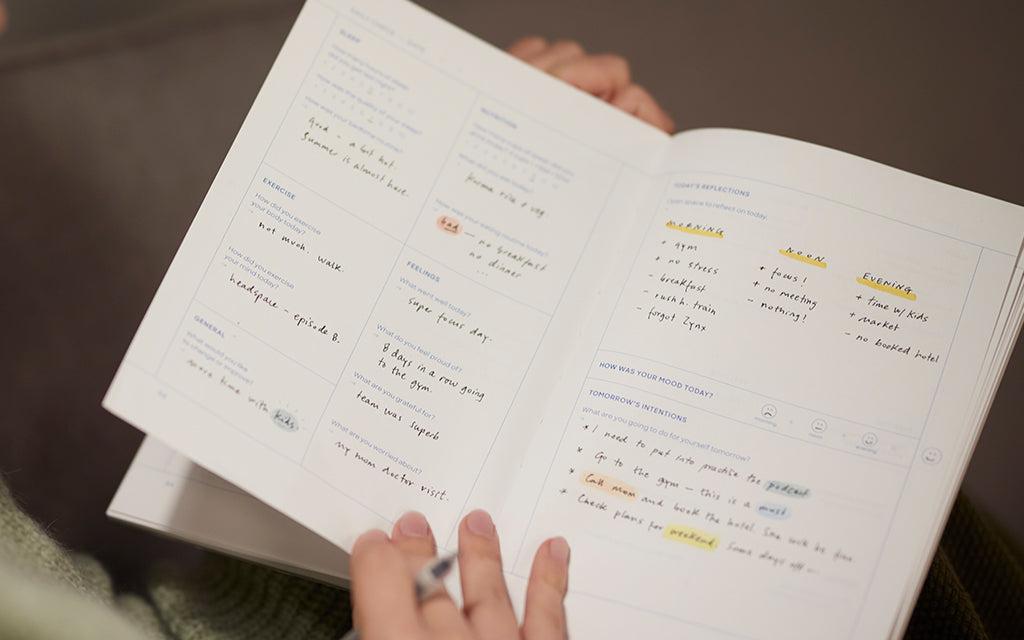
The version of writing things down that actually builds as a daily habit is much lower stakes. Three sentences about what happened today. A list of things on your mind before bed. A few notes about what you want to accomplish tomorrow. Any writing that gets thoughts out of your head and onto a surface where you can look at them.
The cognitive benefit of externalizing what is in your head is real and well-documented. Thoughts circling around inside your mind without being captured take up processing capacity. Writing them down frees that capacity for other things.
Tools That Make Daily Writing Easier
Paper notebooks work fine and have the advantage of no notifications, no battery issues, and a friction-free experience. The Leuchtturm1917 and Moleskine are the standard recommendations for good reason because the paper quality holds up to daily use without bleeding through.
For digital options, Notion and Day One are both well-designed for daily journaling. Day One in particular has a clean interface that makes quick daily entries easy, and the memories feature that shows you what you wrote on the same date in previous years produces genuinely interesting moments of reflection. Obsidian works well for people who want to connect thoughts across entries over time.
The tool matters less than the consistency. Five minutes of writing per day produces more value over a year than elaborate weekly reflections that only happen occasionally.
The Habit of Finishing Small Things Immediately
This one took me a long time to identify as something worth doing deliberately. The behavior is simple: if something takes less than two minutes to handle, doing it immediately rather than adding it to a list.

Reply to the short email now rather than flagging it for later. Put the dish in the dishwasher rather than on the counter. File the document rather than leaving it in downloads. These individual behaviors are trivial. Their accumulation is not.
The alternative is a constant background accumulation of small undone things that creates a subtle ongoing sense of incompleteness. That feeling is a genuine drain on mental energy even when nothing on the list is urgent or important. Clearing small things immediately removes them from mental space entirely rather than parking them in a cognitive holding area that costs something to maintain.
David Allen’s Getting Things Done methodology is built significantly around this principle. The two-minute rule is one of its most practically useful ideas and works even for people who have no interest in adopting the full system.
Protecting Focus Time Like It Is a Meeting
Most people let their day happen to them. Meetings, messages, requests, and interruptions fill the available time and whatever remains goes to the actual work that matters. This produces days that feel exhausting and unproductive simultaneously because most of the effort went to reactive rather than generative work.

The habit of blocking specific time for focused work, and treating that block with the same seriousness as an external commitment, changes what is possible in a working day. Even one ninety-minute block of protected focus time per day produces more meaningful output than a full day of reactive scattered work.
Making Focus Blocks Actually Work
Telling people you are unavailable during a focus block only works if the behavior is consistent. One or two weeks of actually not responding to messages during that window trains the people around you to expect it. The discomfort of establishing that boundary is temporary. The benefit of having it is ongoing.
Apps like Freedom and Cold Turkey block distracting websites and apps during designated periods. Forest gamifies the process by growing a virtual tree during focus sessions that dies if you leave the app. These are not elegant solutions but they work for people who struggle with self-interruption, which is most people.
Turning off notifications entirely during focus blocks removes the pull of the unread badge. Airplane mode on the phone is the most reliable version of this because it removes the option entirely rather than requiring ongoing resistance.
Ending the Day With Intention Instead of Drift
How a day ends affects how the next day begins. Most people end their working day by simply stopping when they run out of energy or time, leaving tasks half-finished, contexts open, and the next day’s priorities undefined. The morning then starts with reconstruction: figuring out where things were left, what needs to happen, and what the most important thing to do is.
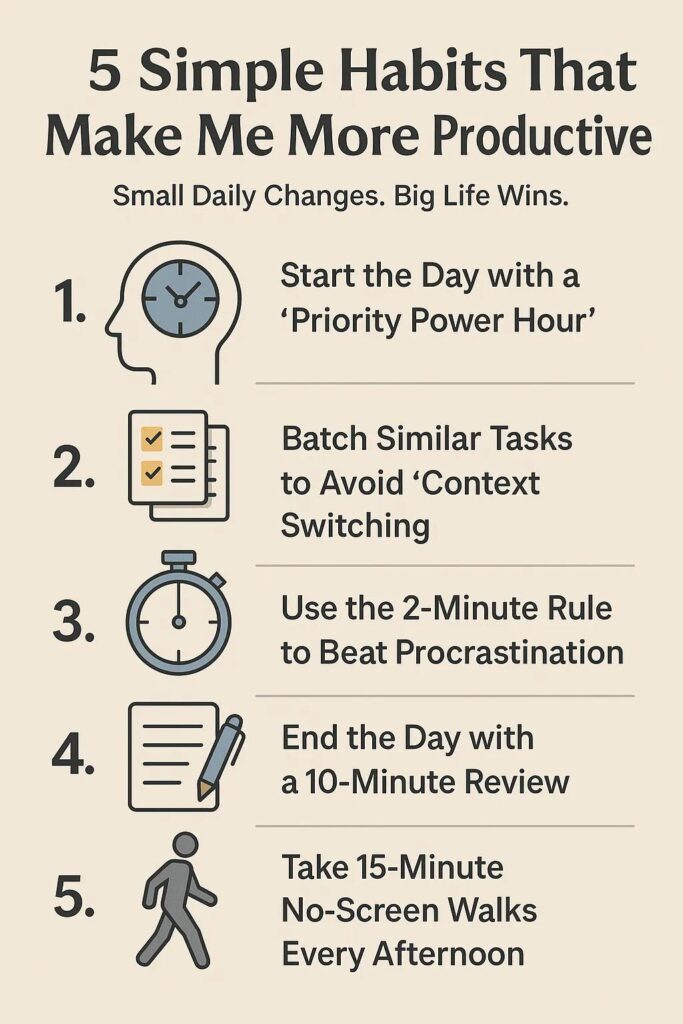
A five-minute end-of-day routine eliminates that reconstruction cost. Closing open tabs and documents. Writing two or three sentences about what happened and what needs to happen tomorrow. Clearing the desk surface if working from home. These actions create a psychological boundary between work and non-work time that makes the evening feel more genuinely restful.
The shutdown ritual, as Cal Newport calls it in Deep Work, is not about productivity optimization. It is about giving the brain permission to stop processing work-related thoughts because there is a clear record of where things stand.
Sleep Is the Habit That Makes All Other Habits Work
Everything else in this article produces better results when sleep is adequate. Movement feels easier. Focus comes faster. Small frustrations that would otherwise trigger reactive decisions feel more manageable. Poor sleep degrades all of it.

The habits that protect sleep quality are well-established and consistently underused. Consistent sleep and wake times, even on weekends, stabilize the circadian rhythm in ways that make falling asleep and waking up noticeably easier. Cool room temperature, around 65 to 68 degrees Fahrenheit or 18 to 20 Celsius, supports the body temperature drop that signals sleep readiness.
Winding Down Before Bed the Right Way
The ninety minutes before sleep matter more than most people realize. Bright screens, intense conversation, stressful content, and vigorous exercise all raise alertness at a time when the goal is the opposite. Doing the same low-stimulation things in the same sequence before bed, reading, a warm shower, dimming lights, creates a signal that sleep is approaching that becomes increasingly effective the more consistently it is repeated.
The Oura Ring tracks sleep quality in enough detail to be genuinely informative about which behaviors affect sleep for you specifically rather than on average. It is expensive at around three hundred dollars but produces personalized data that generic sleep advice cannot. For a free alternative, the Sleep Cycle app tracks sleep quality through sound and provides a pattern over time that reveals what conditions produce better or worse rest.
Magnesium glycinate taken thirty to sixty minutes before bed is consistently reported to improve sleep quality and reduce the time it takes to fall asleep. It is not a sleep drug. It is a mineral that many people are deficient in that plays a role in the nervous system relaxation that precedes sleep. Worth trying for a month before spending money on more elaborate interventions.
The Social Habit That Improves Everything Else
Most habit guides focus on individual behaviors and skip the social dimension entirely. But consistent quality connection with other people is genuinely one of the strongest predictors of overall wellbeing in the research, and it functions like a habit in the sense that it requires regular practice to maintain.

Sending one message per day to someone you actually care about is a version of this habit that takes less than two minutes and produces returns that compound significantly over years. Not a mass check-in, not a forwarded meme. A specific message to a specific person that acknowledges something about them or your shared history.
This is not about networking or maintaining contacts strategically. It is about the simple fact that relationships require regular contact to stay alive, and sporadic contact around major life events is not sufficient to maintain the quality of connection that actually affects how a life feels from the inside.
Reviewing What Is Working Instead of Just Adding More
The most important meta-habit in this whole list is periodically reviewing which habits are actually producing something and which ones are being maintained out of routine without any real benefit.
Reviewing once a month, even briefly, what you are doing daily and whether it is serving the life you are trying to build prevents the accumulation of behaviors that made sense at one point but have become irrelevant. Good habits should earn their place continuously rather than being maintained because dropping them feels like failure.
The same review reveals which behaviors you intend to do but consistently do not, which is useful information too. A habit that never actually gets done is not a habit, it is an aspiration wearing a habit’s clothing. Either figure out why it is not happening and address that, or release it without guilt and direct the intention toward something that will actually stick.
Three years of paying attention to this stuff has produced a life that feels noticeably different from the one that felt like a treadmill moving slightly too fast. Not because of any single habit but because small consistent behaviors accumulated into a different daily texture. The days still get hard. The drift still happens occasionally.
But knowing what small things actually move the needle means getting back on track takes hours rather than months. That alone is worth the attention.