

I watched my cousin pour three years of savings into a food truck. Jerk chicken, rice and peas, homemade sauces. The food was genuinely good. People stopped, ate, came back. For about four months, things looked promising.
Then he ran out of money. Not because the food was bad. Not because he stopped working hard. The truck needed a repair he couldn’t afford, a permit renewal piled on top of that, and a slow January wiped out whatever cushion he had left. By February, the truck was parked in his driveway and hasn’t moved since.

That story bothers me more than it probably should. Because I’ve seen versions of it play out too many times with too many people who genuinely deserved to make it. And what frustrates me most is that the reasons are almost always the same, just dressed up differently each time.
So I want to talk about what actually happens. Not the Instagram version of entrepreneurship. The real stuff.
Why Everything You’ve Been Told About Business Success Is Incomplete
There’s a version of business advice that gets shared constantly. Work harder than everyone else. Solve a real problem. Build relationships. Believe in your vision. Stay consistent.
None of that is wrong exactly. But none of it tells you what to do when your biggest client suddenly disappears, or when your supplier doubles their prices with two weeks’ notice, or when you realize the market you thought existed is much smaller than you estimated.
The motivational version of business skips the part where things go sideways for no dramatic reason. Where you’re doing everything right and still finding yourself short at the end of the month.
Real business survival is messier than that. It comes down to a smaller set of unglamorous fundamentals that most people either skip or underestimate until it’s too late.
The Gap Between Knowing and Actually Doing
Most business owners know they should track their finances carefully. Most know they should understand their customers deeply before building anything. Most know they should document their processes.
Knowing isn’t the problem. The gap between knowing something and actually building it into your daily routine is where most businesses quietly lose ground.
Understanding Who You’re Actually Selling To
This one sounds obvious until you watch how many businesses get it wrong, including businesses that have been operating for years.

The assumption trap is easy to fall into. You have an idea, it makes sense to you, people in your immediate circle seem interested, so you build it. What you’ve actually done is solve a problem for yourself and maybe a handful of friends who were too polite to push back.
My cousin’s food truck problem started here, honestly. He assumed lunchtime office workers would be his main crowd. Turned out the area he parked had mostly remote workers who ate at home. The foot traffic he counted on never materialized the way he expected.
Getting Real Feedback Without Wasting Months
Before you build anything significant, talk to the people you’re planning to sell to. Not your friends. Actual strangers who fit the profile of your target customer. And don’t ask them if they’d buy it. Ask them what they currently do to solve that problem, how much it costs them, what they hate about it, and whether they’ve ever tried to fix it themselves.
Those answers will tell you far more than a yes or no to “would you pay for this.”
Google Forms and Typeform are free and take ten minutes to set up. Reddit threads, Facebook groups, and niche forums are goldmines for understanding what real customers complain about. One-star reviews on competitor products on Amazon are basically free research reports written by frustrated customers.
The goal isn’t to confirm your idea. The goal is to stress-test it before you’ve spent money building it.
Cash Flow Kills More Good Businesses Than Bad Ideas Do
Here’s something that took me too long to properly understand. A business can be genuinely profitable and still run out of cash. Those two things are not the same and confusing them is a serious, expensive mistake.
Profit is an accounting concept. Cash is what’s actually sitting in your account when bills come due. You can have a stack of unpaid invoices that technically represent profit and still not be able to make payroll.
A friend of mine ran a small events company. She’d land contracts worth thousands of pounds, execute them perfectly, and then wait sixty, sometimes ninety days to get paid. Meanwhile her suppliers needed payment in thirty. She was essentially financing her clients’ events with her own money, and she nearly went under doing it, despite having more business than she could comfortably handle.
Practical Ways to Keep Cash From Quietly Disappearing
Track what comes in and what goes out every single week. Not monthly. Weekly. When you check monthly, surprises are already a problem by the time you spot them. A simple spreadsheet works fine early on. When things get more complex, tools like QuickBooks, Wave, or FreshBooks make it much easier to see your position at a glance.
Know your runway. That means understanding exactly how many months you can operate with zero new revenue. Three months minimum is the standard advice. Six months is genuinely comfortable. Anything under two months is genuinely stressful and should be treated as an emergency.
Invoice the moment work is complete. Chase late payments without apology. The way you handle late payments in the early months teaches your clients what behaviour you’ll accept. If you quietly let sixty-day delays slide, you’ve trained them that sixty days is fine.
Negotiate hard on payment terms. Ask suppliers if you can pay in forty-five days instead of thirty. Ask clients to pay in fifteen days instead of thirty. Even small shifts in those timelines can change how your month feels financially.
Being Excellent at Your Work Is Not the Same as Being Good at Running a Business
This one is uncomfortable but it matters. The skills that make someone great at their craft are not automatically the skills that make someone good at running a business.

An excellent architect might be terrible at following up with leads. A genuinely gifted chef might hate managing staff and let kitchen culture slowly fall apart. A brilliant software developer might undercharge for years because pricing conversations feel awkward.
Running a business requires a completely different set of muscles. Sales, financial management, hiring, marketing, operations. Most people are naturally strong in one or two of those areas and genuinely weak in the rest.
Knowing Where Your Blind Spots Are
The honest move is to figure out early which parts of the business you’re avoiding. Not which parts you dislike, but which parts you actively avoid thinking about. That avoidance is almost always where the biggest risks are hiding.
If you hate looking at your bank account, your financial management is probably a problem. If you never follow up after sending proposals, your sales process is leaking money. If your team keeps making the same mistakes, your systems and documentation need work.
You don’t need to become an expert in everything. But you do need to either get good enough to manage it or find someone else who can. Notion and Trello are genuinely useful for building simple systems that don’t rely on you remembering everything. Asana and Monday.com work well once a team gets bigger. But the tool matters less than the habit of building and following repeatable processes.
Pricing Is Where Most Business Owners Quietly Sabotage Themselves
Underpricing is one of the most common patterns in struggling businesses. It feels like a smart move when you’re starting out. Price low to get clients, earn trust, build a portfolio, then raise prices later.
The problem is that later rarely arrives. Low prices attract clients who chose you specifically because you were cheap, and those clients often resist every price increase. You end up stuck, working for rates that don’t leave enough margin to hire help or invest in growth.
There’s also a psychological signal that price sends. A consultant charging forty dollars an hour feels less credible than one charging two hundred, even if their actual expertise is identical. Price is information. Customers use it to make assumptions about quality before they’ve experienced anything.
How to Find a Price You Can Actually Defend
Stop building your price from your costs upward. That method almost always produces a number that’s too low because people systematically underestimate the real cost of their time.
Instead, start from the value the customer receives. If your service helps a business generate fifty thousand dollars more revenue annually, charging three thousand for it is not expensive. It’s excellent value. Framing price against outcome completely changes how the conversation goes.
Look at what competitors charge, not to copy them, but to understand the landscape. Then ask yourself genuinely and honestly whether your offer is better, equivalent, or not quite there yet. Price accordingly.
When you raise prices, do it on new clients first. Watch the response. If every single person pays without any pushback, you’re probably still underpriced. Some resistance is actually healthy.
The Business Owner Is Often the Ceiling
There’s a stage in most growing businesses where the founder becomes the bottleneck. Everything needs their approval. Every decision loops back through them. Nothing moves forward unless they’re available.
This works fine when a business is tiny. It becomes a serious problem once there’s a team, a client base, and more moving parts than one person can reasonably hold in their head.
The hardest part isn’t learning to delegate. It’s getting comfortable with the idea that someone else might do something differently than you would, and that differently isn’t always worse.
Building a Business That Works Without You in Every Conversation
Document your processes. Write down not just what you do, but why you make the decisions you make along the way. That context is what allows someone else to handle edge cases without coming to you every time.
Hire for character and work ethic before raw skill in most roles. A person who takes initiative, communicates clearly, and cares about doing good work will figure out the technical parts. The reverse is much harder to train.
Give people ownership of outcomes rather than just tasks. A team member who owns customer satisfaction is going to think very differently about their work than one who’s just been told to answer emails.
Adapting Is Not Optional, It’s the Job
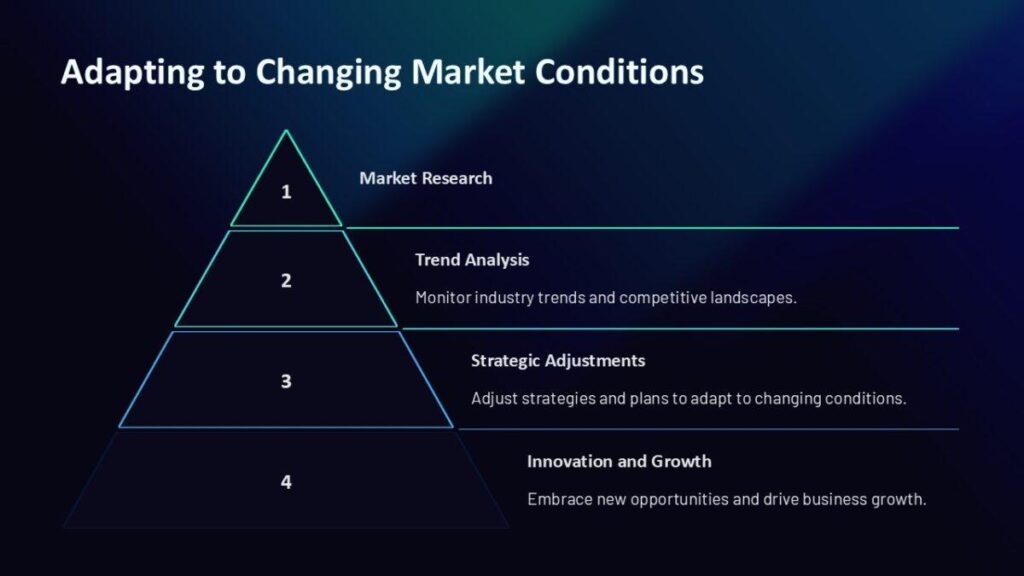
Markets shift. What worked two years ago sometimes stops working overnight. The businesses that treat their initial model as permanently correct are the ones that get blindsided.

Blockbuster and Kodak get used as cautionary tales so often they’ve almost become clichés. But smaller versions of the same pattern happen constantly in businesses that nobody writes case studies about. A local gym that ignored online fitness during the pandemic. A print shop that didn’t move into digital until clients had already moved on. A retailer that kept buying the same inventory because it sold well in 2019.
Staying current doesn’t mean chasing every trend. It means staying genuinely curious about whether what you’re doing is still working and why.
Practical Ways to Stay Ahead Without Burning Out
Talk to your customers regularly. Not just when something goes wrong. Ask them what else they’re struggling with. Ask what they almost chose instead of you. Ask whether there’s anything they wish you offered.
Talk to customers who left. That’s uncomfortable, but it’s some of the most valuable feedback you can get. Most of them will tell you honestly if you ask with genuine curiosity rather than defensiveness.
Read outside your industry. A coffee shop owner reading about retail experience design might find ideas that nobody in the hospitality space has tried yet. Cross-pollination of ideas is genuinely underrated.
Mistakes That Look Small and Aren’t
Some of the most damaging mistakes in business are the ones that feel manageable in the moment. A few recurring ones show up constantly.
Hiring too fast when things are going well. Revenue spikes and suddenly it feels like the right time to add three people. Then the spike passes and the payroll stays. Building a team before the revenue is stable enough to support it consistently is a trap.
Ignoring a small but growing problem. A recurring complaint from customers that keeps getting noted and never addressed. A system that’s slightly broken but everyone works around. A team member who’s clearly disengaged but replacing them feels difficult. Small problems don’t stay small. They compound.
Spending on things that feel like progress but aren’t. A beautiful logo before you have paying customers. A premium office space before you have reliable revenue. Expensive software subscriptions for tools you haven’t fully used yet. The stuff that looks like a business without actually building one.
Not separating personal and business finances. This one causes genuine chaos at tax time and makes it nearly impossible to understand how the business is actually performing. Open a separate business bank account from day one, even when things are tiny.
What the Businesses That Make It Actually Look Like
After watching this long enough, certain things genuinely do separate the businesses that survive from the ones that don’t.
Clarity about who they serve and what problem they solve. Not a vague answer. A specific one that every person in the business can articulate without hesitation.
A real relationship with their numbers. They know their margins, their monthly burn, their customer acquisition cost, their average order value. Not because they love spreadsheets, but because those numbers tell them things they can’t afford not to know.
Systems that don’t depend on any one person’s memory. The business can function when someone’s sick, on holiday, or eventually replaced. Things are written down. Processes are followed. Decisions have clear owners.
Customer relationships that feel personal even when the business has grown. People buy from people they trust, and trust is built through consistency, attention, and genuinely caring whether the customer got what they needed.
Willingness to say no. To the wrong clients, the wrong partnerships, the wrong opportunities that would pull focus away from what’s actually working. Saying no is harder than it sounds when money is on the table, but directionless yes-saying is expensive.
The Part Nobody Likes Admitting
Luck is a real factor. Timing is a real factor. Two business owners with equal skill, equal preparation, and equal effort can end up with very different outcomes because of things entirely outside their control.
My cousin’s food truck story might have gone differently if that permit renewal hadn’t landed the same month as the mechanical repair. Or if he’d started in March instead of October. Or if one of his early customers had happened to have a large corporate event and put him in touch with the right person.
That’s not a satisfying thing to acknowledge. But pretending luck plays no role is also not honest.
What you can actually control is your preparation, your financial cushion, your customer relationships, how quickly you spot problems, and whether you’re willing to adapt when the environment changes. Control those things well and you give yourself a real fighting chance.
The rest you learn to make peace with.
My cousin’s truck is still in the driveway. He talks about starting again sometimes, doing it differently, smaller and leaner with better financial planning behind it. I hope he does. Because watching good people with real talent get taken out by avoidable problems is a genuinely frustrating thing to witness.
And most of those problems, not all, but most, have known solutions. You just have to be willing to deal with the unglamorous version of building a business instead of waiting for the version that only exists in highlight reels.