

Three years ago I was sitting on a beach in Portugal, genuinely beautiful place, cold drink, nothing urgent to do, and I remember thinking — why don’t I feel anything?

I’d been looking forward to that trip for months. Saved for it, planned it, talked about it constantly at work. And there I was, day two, already mentally running through the emails piling up at home, calculating how many days until I had to go back, dreading the return before I’d even properly arrived.
That’s when it hit me. The vacation wasn’t the problem. The vacation was the symptom. The thing I was running from was the other 50 weeks of the year.
That’s the version of life most people are quietly living. Work you tolerate, weeks you survive, and two weeks somewhere warm that you hope will make up for the rest. And then the two weeks end and you’re back to tolerating and surviving and counting down again.
I’m not going to pretend I’ve completely solved this. But I’ve made enough changes over the past few years that Monday mornings feel genuinely different now. Not perfect. Not always exciting. But not something I need to escape from.
Here’s what actually helped.
Why Most People Feel Trapped in Their Own Lives
The uncomfortable truth is that most people built their life by accident. Not through any kind of deliberate choice, but by following the path that had the least resistance at each decision point. Take the job that paid most. Stay because leaving felt scary. Keep going because stopping felt like failure.
Nobody sat down and designed this. It just accumulated. And then one day you look around and realize you’re living inside a structure that someone else built for someone else’s reasons and somehow it became yours.
The weird part is that many people living this way aren’t even unhappy exactly. They’re just sort of numb. Going through the motions with occasional flashes of “wait, is this actually what I want?” that get pushed down because examining them feels too disruptive.
The Vacation Problem Nobody Talks About
Vacations have become a coping mechanism. Which isn’t inherently terrible. Everyone needs to decompress.
But when you notice that you spend most of the year waiting for vacation, and then the vacation itself feels insufficient, and you return from it needing to recover from it, something has gone wrong with the math.
The issue is that two weeks of good doesn’t balance out fifty weeks of dread. The math doesn’t work that way, even if we act like it does.
Start With What’s Actually Draining You
Before changing anything, it’s worth getting honest about what specifically feels terrible.
Most people when asked “what’s wrong with your life” say something vague like “everything” or “I’m just tired.” That’s real, but it’s not useful. Tired from what, specifically?

Spend one week writing down every moment you feel a noticeable dip in mood or energy. Not big dramatic moments. The small recurring ones. The 3pm meeting that nobody needs but keeps getting scheduled. The commute. The Sunday evening feeling. The moment you check your work email at 9pm and feel something clench in your chest.
At the end of the week, you’ll have a list that’s much more specific than “everything.” And specific problems are actually solvable in ways that “everything” isn’t.
What Usually Shows Up on That List
For most people it’s some combination of a few things.
Work that doesn’t match what they’re actually good at or interested in. A schedule they have no control over. Relationships that take more than they give. Physical environment that wears them down, whether that’s a noisy office, a long commute, or a home that never quite feels restful. And underneath all of that, a lack of things they’re genuinely looking forward to on a regular basis, not just annually.
None of these are fixed overnight. But identifying which ones are most responsible for the draining feeling is the starting point. Because spending energy fixing the wrong thing is exhausting in its own way.
Design Your Weeks, Not Just Your Vacation
Here’s something that shifted things significantly for me. Instead of thinking about the year and where I’d take time off, I started thinking about what a genuinely good week looked like.

Not a fantasy week. Not “win the lottery” week. A realistic, achievable week with the actual job and the actual life I had. What would it contain to feel like a week worth living?
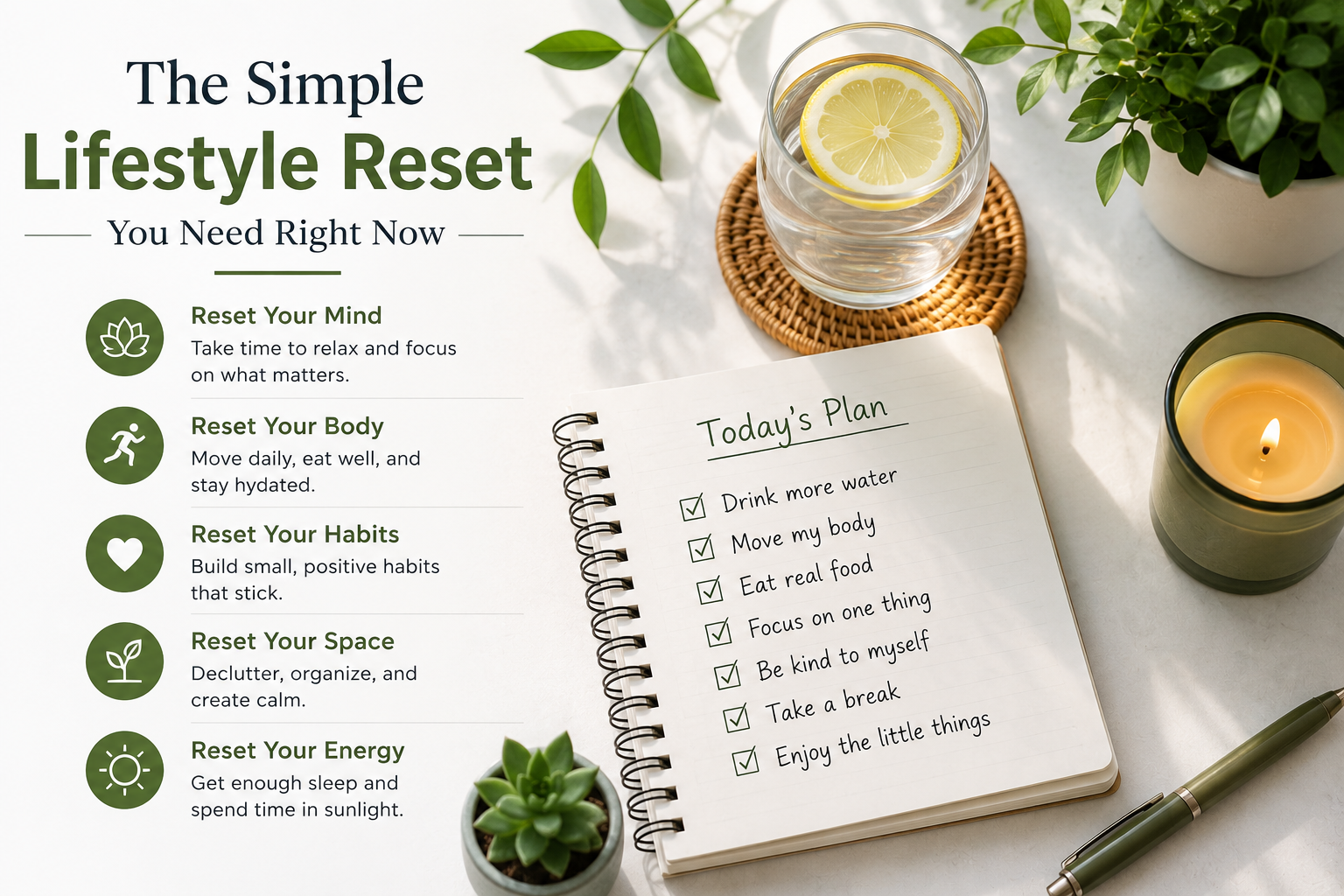
For me the list was embarrassingly simple. Time outside every day, even briefly. At least two conversations that felt real rather than transactional. Physical movement that wasn’t a chore. At least one evening where nothing was scheduled and I could just read or watch something or do nothing.
Almost none of that was happening in my actual weeks at the time. Not because it was impossible, but because I’d never actually named it and built toward it. Weeks just happened. Good or bad was left to chance.
Building Your Week Backward
Once you know what a good week contains, the next step is engineering it into the structure you actually have.
This doesn’t mean overhaul everything immediately. It means finding small consistent insertions. A walk before work instead of scrolling for twenty minutes. Protecting one evening per week as genuinely unscheduled. One lunch break where you don’t eat at your desk.
Notion and Google Calendar are both useful here, not for productivity optimization but for actually blocking and protecting the things that make your week feel livable. If it’s not on the calendar, it tends to not happen. That sounds obvious and it took me way too long to actually act on it.
The point isn’t to make every week perfect. It’s to make every week contain something worth being in.
Work Is Usually the Core Problem
Might as well address this directly.
For most people, work takes up the majority of their waking hours and a disproportionate share of their mental and emotional energy. If work feels terrible, everything else has to compensate for that, and nothing can fully compensate for something that occupies that much of your life.
There are a few different versions of work problems and they require different responses.
The work itself might be wrong. The actual tasks, the actual domain, the actual type of thinking required might just be a bad match for who you are. This is harder to fix without changing roles or careers.
The environment might be wrong. Good work, bad culture. Interesting problems, terrible management. Meaningful contribution, soul-crushing office politics. This is sometimes fixable by changing employer while staying in the same field.
The conditions might be wrong. The hours, the commute, the inflexibility, the way your time is treated. This has become increasingly negotiable in ways it wasn’t previously, and it’s worth actually negotiating rather than assuming the answer is no.
When to Change Versus When to Endure
This is where the honest answer is frustratingly personal.
Some work situations are genuinely bad enough that enduring them is slowly doing damage and the right move is to leave as soon as practically possible, even to something uncertain. Other situations have more room to maneuver than they first appear — through different conversations, different roles within the same organization, or small structural changes that shift how the work feels.
The way to tell the difference, roughly, is to ask: if conditions X, Y, and Z were different, would this work feel okay? If you can name realistic X, Y, and Z, there’s something to work with. If no version of this job would feel acceptable, that’s useful information too.
LinkedIn is actually good for understanding what’s possible in your field. Not for scrolling aspirationally but for seeing what roles actually exist, what they pay, what skills they ask for, and how far your current experience might take you. Glassdoor for understanding culture before you join somewhere new. Both are more useful when you approach them with a specific question rather than vague browsing.
The Relationship Between Your Environment and Your Mood
This one gets underestimated constantly.
The physical environment you spend most of your time in shapes your mood in ways that aren’t abstract or philosophical. They’re fairly mechanical. Noise affects stress levels. Natural light affects energy and sleep quality. Clutter creates a low-level cognitive load. A commute that’s long and unpleasant takes something from you every single day.

People often treat these as fixed when they’re not always fixed. Remote or hybrid work wasn’t available for most people five years ago and now often is. A shorter commute often pays for itself in wellbeing even if it costs slightly more in rent. Fixing the lighting in the room where you work from home is a forty-pound problem that some people spend years complaining about instead.
The Home Environment Specifically
The place you come back to at the end of the day either helps you recover or doesn’t. This is worth taking seriously as a practical matter, not as a luxury.
A home that feels chaotic and unrestful extends the stress of the day rather than ending it. This doesn’t require a redesign or new furniture. It usually requires a bit of ruthless decluttering and a few small rituals that mark the transition from work mode to not-work mode.
The threshold ritual thing sounds contrived but it works for a lot of people. Changing clothes when you get home. A specific tea or coffee that you only make in the evening. A short walk after work before sitting down. The brain responds to these cues and the transition becomes more reliable over time.
The Myth of Balance and What Actually Works
Work-life balance is a phrase that has been repeated so many times it’s lost most of its meaning.
The idea that you can neatly partition your hours between work and life and then find equilibrium doesn’t really describe how most lives work. Work bleeds into evenings. Personal crises affect work performance. The categories themselves are fuzzy.
What seems to work better is thinking about integration rather than balance. Not “am I keeping these things separate” but “is the overall texture of my life something I can actually sustain and that contains things I value.”
That framing shift matters because it stops you looking for a perfect 50/50 split that doesn’t exist and starts you looking for a life where even the difficult parts feel like they have a point, where the good parts aren’t so rare you’re counting the days to them.
Micro-Recovery Versus Macro-Recovery
Annual vacations are macro-recovery. They matter but they can’t do the work if micro-recovery isn’t happening throughout the year.
Micro-recovery is the small daily and weekly replenishments. Enough sleep. Regular movement. Time spent in ways that don’t require performance or productivity. Genuine rest, which is different from being exhausted on a sofa watching something you don’t care about.
The Calm and Headspace apps get recommended constantly for the meditation angle and they’re fine for that if meditation resonates with you. But micro-recovery doesn’t have to be meditation. It’s anything that genuinely restores rather than just numbs. Cooking an actual meal. Reading a book with no practical value. Calling a friend rather than texting. Walking somewhere with no destination.
The test is whether you feel slightly better after than before. Not dramatically better. Slightly better, consistently, is enough.
Build Things That Are Yours
One of the quieter drains in a life that revolves entirely around work is the absence of things that belong to you. Projects, interests, skills, relationships that exist entirely outside your professional identity.
This matters more than it sounds. When work is hard, which it will sometimes be, having things that are genuinely yours provides an anchor that work can’t provide. And when work is going fine, these things add a dimension to your life that work generally can’t offer.
This doesn’t have to be a side hustle or a monetized passion project. It can just be something you’re learning or making or doing that has nothing to do with being useful or productive. Growing things. Running. Writing that nobody reads. Learning a language slowly with no deadline. Playing an instrument badly.
Why “I Don’t Have Time” Usually Isn’t True
Most people who say they don’t have time for things they’d enjoy have between one and three hours per day of time that currently goes to scrolling social media or watching content they’re not particularly invested in.
That’s not a criticism. Numbing out after a draining day is understandable. But it’s worth occasionally choosing something active and replenishing over something passive and numbing. Not always. Occasionally.
YouTube has genuinely good tutorials for almost any skill. Duolingo works for language basics if you actually do it daily. Skillshare has courses that are uneven in quality but some are excellent. The access to learning things outside your professional lane has never been easier or cheaper. The limiting factor is almost always decision and habit rather than time or money.
Relationships Are Not a Nice-to-Have
The research on this is fairly consistent and it’s one of the things people tend to put last while believing they’re putting it somewhere in the middle.
Strong relationships, specifically the ones where you can be honest about what’s actually happening rather than performing a version of yourself, are one of the strongest predictors of general life satisfaction that exists. More reliable than income, after a certain threshold. More reliable than career success.
Most people have fewer of these than they think when they look honestly at their contact list. Lots of acquaintances. Fewer actual friendships where the real stuff gets said. And these tend to thin out without active maintenance, particularly past your late twenties when the natural social structures that kept them alive stop existing.
Maintaining Relationships When Life Gets Busy
The main reason adult friendships fade isn’t conflict. It’s the accumulated friction of never getting around to it.
Calendar blocking works here too, which feels weird to say about friendship but is practically useful. A recurring dinner. A standing call. A WhatsApp thread that serves as a low-friction check-in between actual conversations. The structure takes the reliance off spontaneity, which tends to keep losing to busyness.
The Mistakes People Make When Trying to Change Things
Trying to change everything at once is probably the most common one. Big sweeping life reorganizations are appealing in planning and exhausting in practice. They also tend to collapse under their own weight by week three.

Waiting for the perfect moment is another. Starting when the project ends, when the kids are older, when the finances are sorted. Those conditions tend to never fully arrive and meanwhile the years pass.
Copying someone else’s ideal life without checking whether it’s actually yours. Someone else’s version of a great life might involve a very different set of trade-offs than yours. The person who loves working from a van and the person who loves a stable routine in the same city for twenty years might both be living well. The mistake is adopting the form without examining whether it fits your actual preferences.
Optimizing the wrong layer. Spending months finding the perfect productivity system when the underlying problem is that you hate what you’re being productive at.
What This Actually Looks Like Over Time
It doesn’t look like a transformation. That’s probably the most important thing to say about this.
It looks like a series of small, sometimes slow adjustments. A different conversation with a manager that shifts one thing. A recurring Tuesday evening that becomes genuinely yours. A friendship that gets properly maintained instead of drifting. A commute that becomes bearable because you use it for something that doesn’t drain you. A small project that you care about.
None of it is dramatic. None of it makes for a good story.
But accumulated over a year or two, the texture of the weeks changes enough that Monday morning is a different experience. Not because you’ve escaped into some fantasy version of existence, but because the actual life you’re inside has been gradually, stubbornly shaped toward something that fits you a bit better.
The vacations are still good. But you don’t need them to survive anymore. That’s a genuinely different way to feel, and it’s more available than most people think.